

From a dusty DOS computer to intelligent, automated fragmentation analysis systems, WipWare has come a long way. For more than three decades, we’ve helped transform how industries measure and understand the materials they work with.
In 2025, we celebrated 30 years of WipWare. But our story began even earlier, with a pioneering idea in 1986 that would help change the way the mining industry evaluates rock fragmentation.
To mark this milestone, we’re looking back at the people, innovations, and moments that shaped our journey. It’s a story of practical problem-solving, bold ideas, and a lot of hard work.
The Beginning
Before WipWare was WipWare, our founder, Tom Palangio, was working in the field with North Bay DuPont, tackling real-world blasting challenges with innovative thinking and a practical mindset.
One of those challenges would lead to something much bigger.
At the time, evaluating blast fragmentation depended heavily on experience and visual judgment. Engineers could describe a blast as good, fair, or poor, but consistently quantifying the results was another matter entirely.
Tom recognized that better measurements could help engineers understand what was happening, compare results, and improve future blasts.
Solving a Global Problem
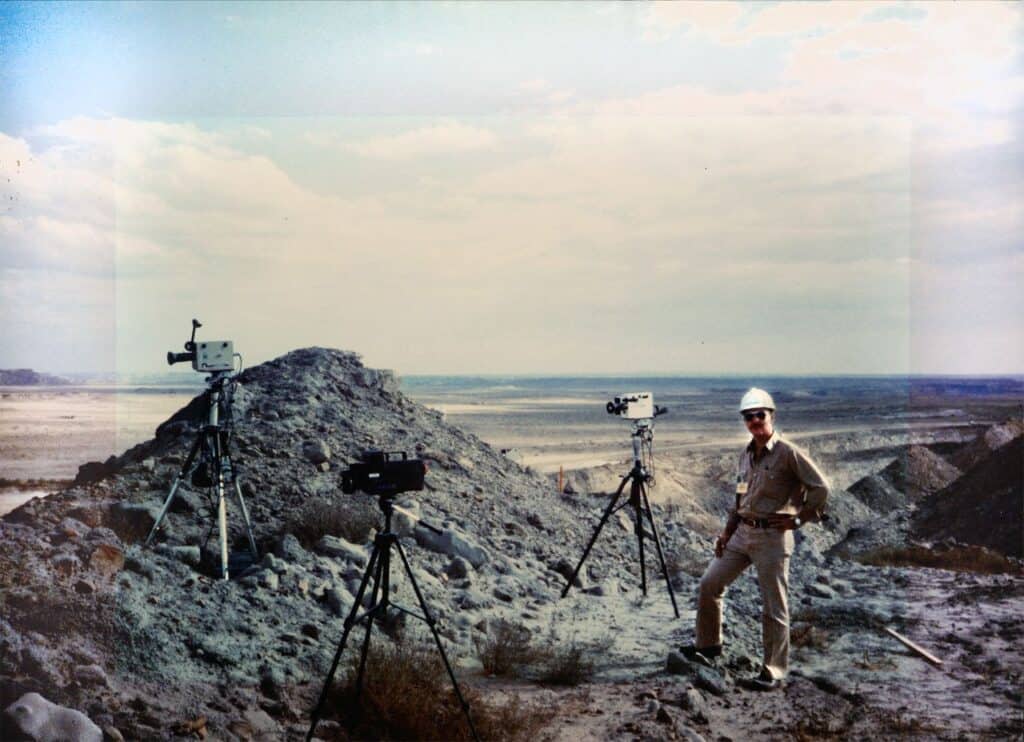
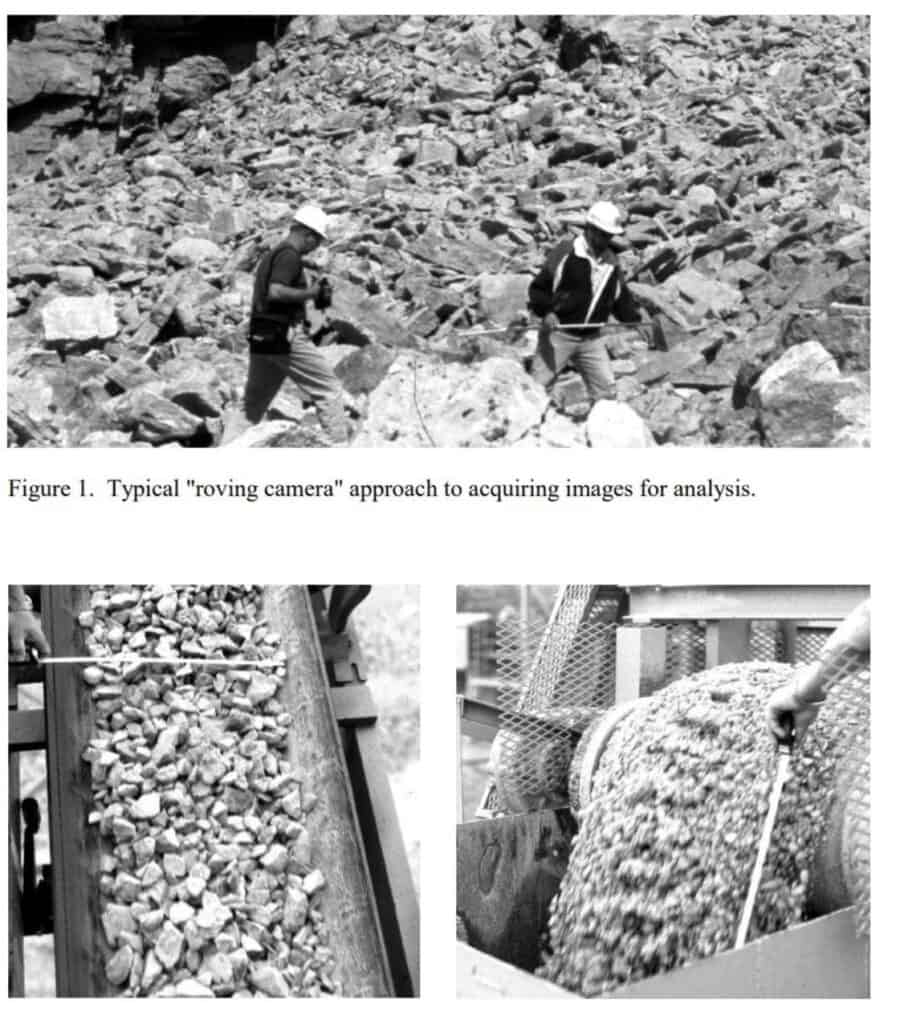
For generations, mining and quarrying operations relied on visual assessments or labour-intensive physical sampling to evaluate blast fragmentation. Collecting, screening, and weighing large quantities of rock was often too costly and impractical for routine use.
What if we could measure fragmentation automatically, using photographs instead?
In 1986, a groundbreaking collaboration involving Franklin Geotechnical, DuPont/ETI, and the University of Waterloo helped turn that idea into reality.
The result was WipFrag, a pioneering digital image-analysis technology for measuring rock fragmentation.
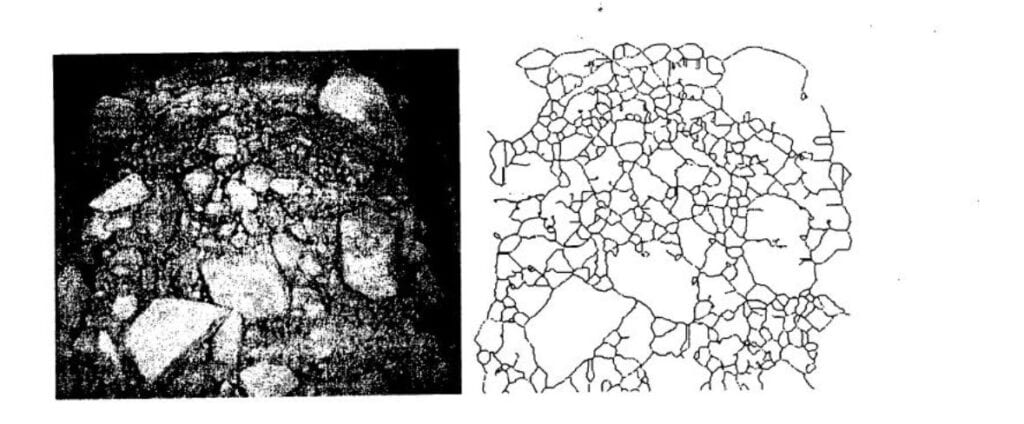
By applying advances in imaging and computer processing, the original researchers developed a way to analyze photographs and video frames of blasted rock and produce quantitative particle size distributions.
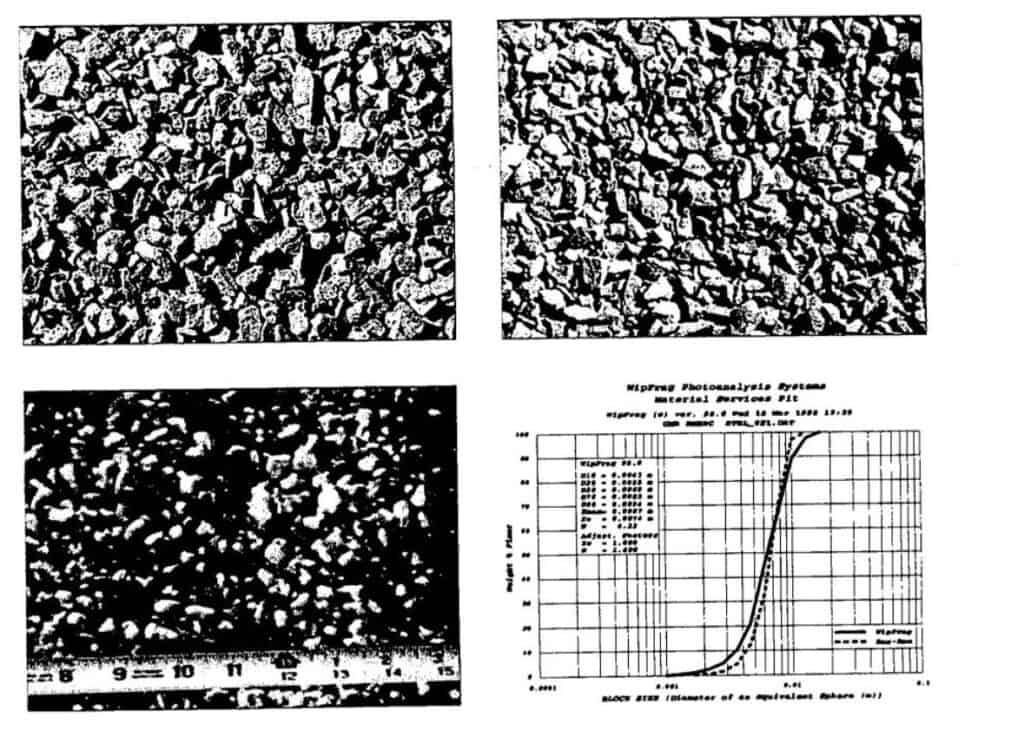
The technology grew from the Waterloo Image Enhancement Process (WIEP), later becoming known as WipFrag.
Tom Palangio, together with Dr. Norbert Maerz, Dr. John Franklin, and the other researchers and developers involved, helped lay the groundwork for technologies that would eventually make automated material measurement possible.
What began as an ambitious research effort would grow into something used by operations around the world.
First Trials
Of course, innovative technology needs to prove itself outside the laboratory.
During the late 1980s and 1990s, WipFrag underwent practical testing at mining operations including INCO’s Copper Cliff and Coleman underground mines and Highland Valley Copper in British Columbia.
These early applications helped demonstrate the value of measuring fragmentation rather than relying on visual assessments alone.
Reported outcomes included a 40% expansion in blast patterns and a 10% increase in mill throughput, providing compelling examples of how quantitative fragmentation data could support operational improvements.
And the technology looked a little different back then.
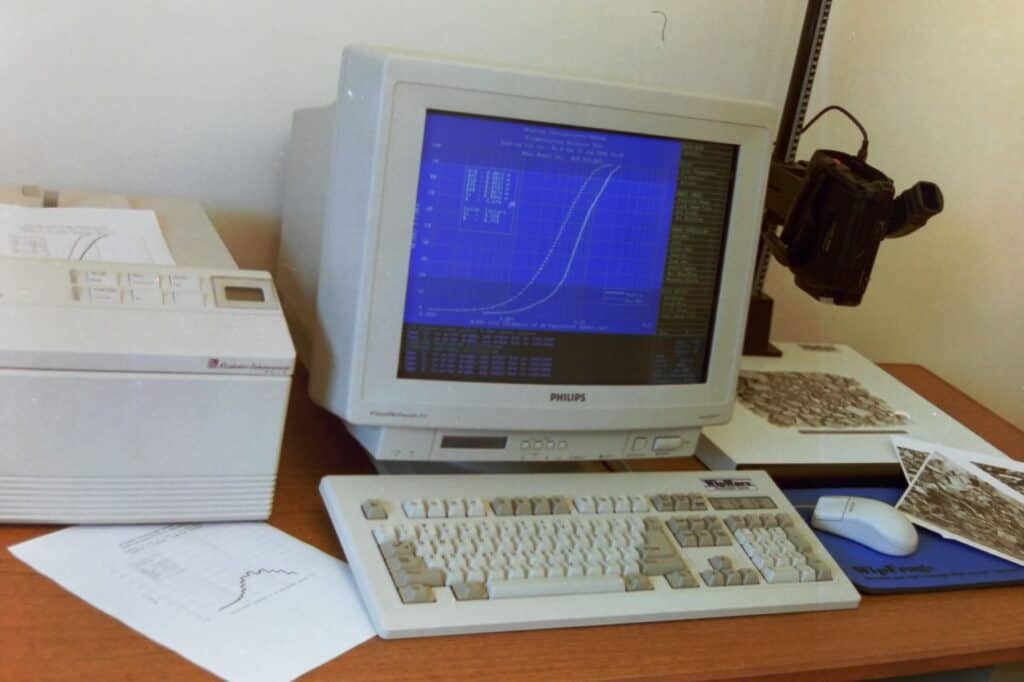
Those early systems ran on DOS computers, long before smartphones, cloud services, or modern automated image processing became part of everyday life.
We owe a great deal to the visionaries who asked whether fragmentation could be measured digitally—and then put in the work to make it happen.
Hats off to the original developers, researchers, and early adopters whose dedication helped establish the foundation on which WipWare continues to build.
WipJoint and the First Automated Systems
The next chapter wasn’t just about improving WipFrag. It was about expanding what could be measured and how that information could be collected.
In 1990, WipJoint was introduced to help characterize rock structure, including apparent joint orientation and in-situ block size.
By 1998, our journey into automated, real-time fragmentation monitoring was underway.
That year, Thomas W. Palangio, the founder’s son, joined the company and helped lead the development of WipWare’s first dedicated hardware systems.
System 1, introduced in 1998, used a single camera for online fragmentation analysis. Just one year later, System 2 expanded that capability to support as many as 12 cameras.
In 2000, WipFrag 2 continued the evolution of our original software.
These developments marked an important transition: fragmentation measurement was moving beyond individual photographs and into ongoing industrial monitoring.
And we were just getting started.
The Beginning of Solo
One of our favourite photographs from the archives shows WipWare team members gathered around the first Solo system in 2007.
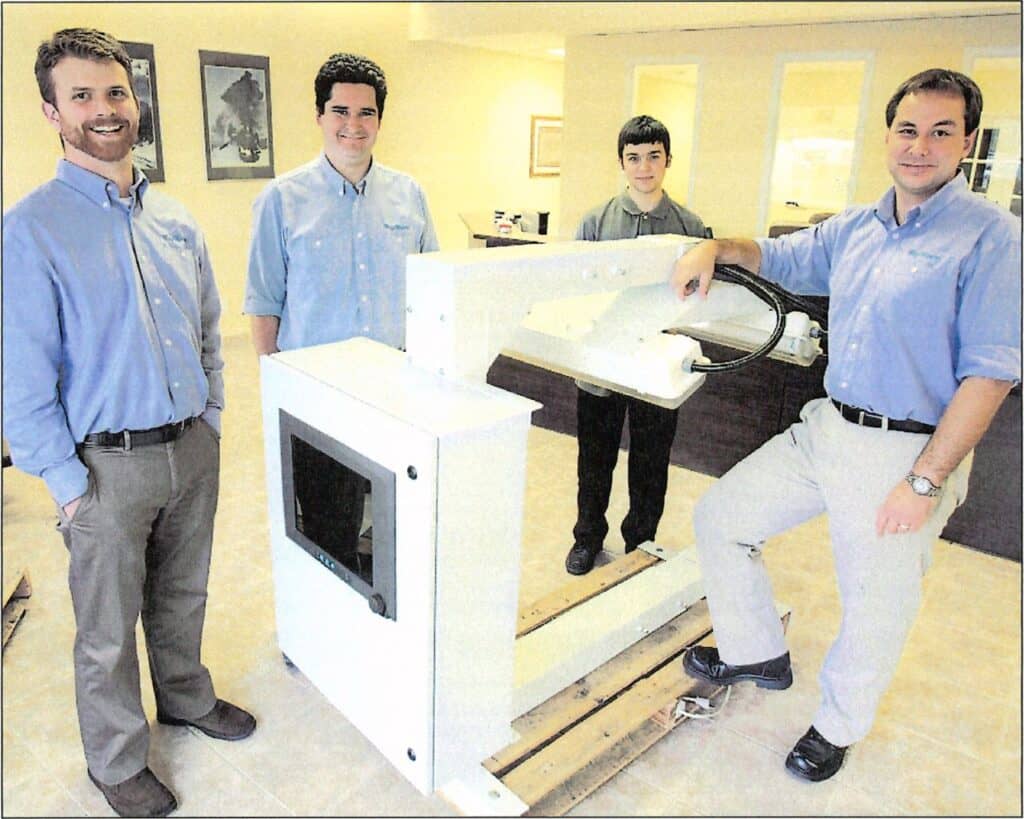
Originally developed for conveyor monitoring and later adapted for vehicle-load applications, this early system helped establish the foundation for what would eventually become today’s Solo and Reflex technologies.
Two familiar faces in that photograph remain central to WipWare’s technical development today: Thomas Palangio, now our Chief Technical Officer and Vice President, and Kevin DeVuono, our Head Programmer.
It’s a reminder that behind every new generation of technology are the people whose knowledge, persistence, and creativity make it possible.
WipFrag Goes Mobile
As our automated systems continued to evolve, so did the original WipFrag software.
In 2014, WipFrag 3 introduced new capabilities for UAV and GIS applications, extending fragmentation analysis beyond conventional ground-level photography.

Then, in 2016, WipFrag came to mobile devices.
For the first time, field personnel could capture and analyze fragmentation images directly using a phone or tablet, making the technology more accessible wherever measurements were needed.
The ability to collect, process, and share results using familiar devices was another major step toward faster and more flexible fragmentation assessment.
From desktop computers to the palm of your hand, WipFrag continued to evolve with the needs of the people using it.
From Pit to Plant
By this point, WipWare’s technologies were doing much more than measuring blasted rock.
Automated systems were helping operations monitor material on conveyors and in vehicle loads, making it possible to evaluate fragmentation at different stages of mining and processing.
In 2018, WipWare founder and President Tom Palangio sat down with Jerrod Downey of The Crownsmen Partners at CIM in Vancouver to discuss that evolution.
Their conversation explored WipWare’s beginnings, the challenges of introducing disruptive technologies to the mining industry, and the importance of getting useful measurement data into the hands of people who can act on it.
It remains a worthwhile look at the thinking behind WipWare’s development.
Watch the original interview below, or read more in our CIM 2018 interview feature.
WipFrag 4 and a New Generation of Analysis
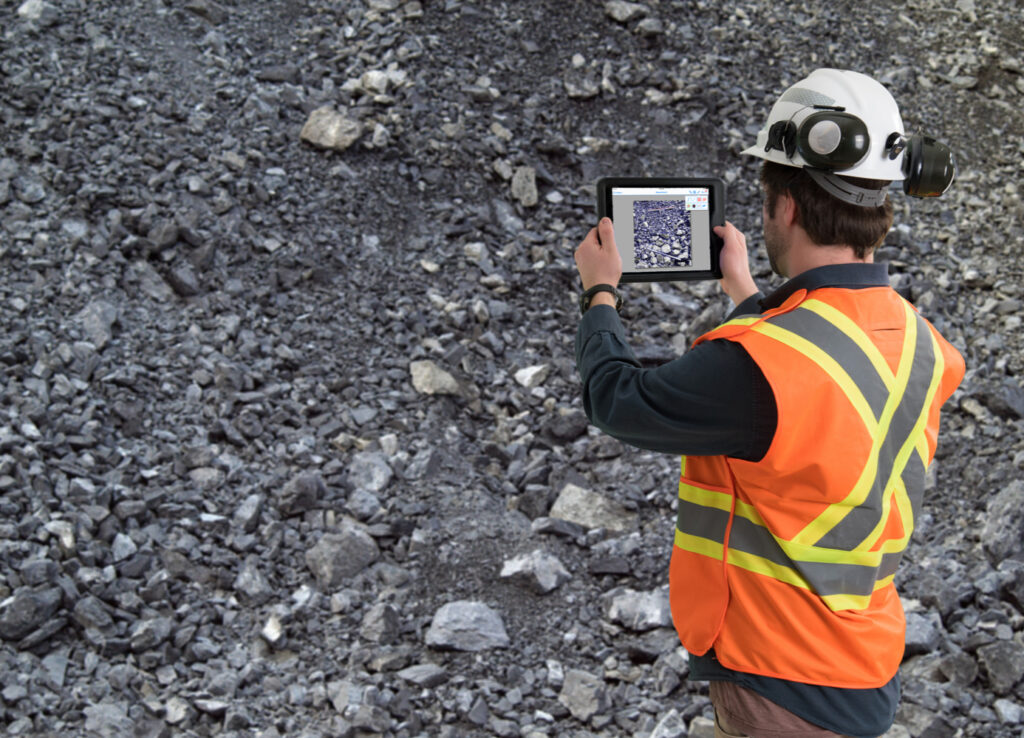
In 2020, WipFrag 4 marked another major step in the software’s development, building on decades of experience in fragmentation measurement.
As computing technology advanced, so did the tools available for identifying particles, analyzing images, and interpreting material characteristics.
Deep Learning edge detection became another important development in WipFrag’s evolution, improving the ways users could identify particles and prepare images for analysis.
Under the technical direction of Thomas Palangio, WipWare continued advancing its software and automated systems, combining practical field experience with modern imaging, computing, and industrial communication technologies.
From a garage in Bonfield, Ontario, to installations around the world, WipWare had grown into an international provider of specialized material measurement technology.
Today, our technologies support measurements of particle size, shape, volume, and colour across field, laboratory, conveyor, and vehicle-load applications.
Always Evolving, Always Innovating
More than 30 years after WipWare’s founding, we’re still looking for better ways to measure, understand, and manage material.
Our technologies continue to evolve, bringing more detailed material information into industrial environments and helping operations turn measurements into meaningful decisions.
We’re improving the ways our systems capture, analyze, and communicate data, while exploring new applications across mining, aggregates, and other industries. From surface operations to underground environments—and wherever else useful measurement can make a difference—we’re excited about what’s ahead.
But innovation has never been just about the technology.
To our technical team: Thank you for the creativity, dedication, and countless hours of work that keep our systems and software field-ready and rock solid.
To the researchers, developers, and innovators who helped bring us this far: Thank you for laying the groundwork, challenging conventional thinking, and building on the ideas that came before.
And most importantly, to our customers, resellers, and partners around the world: Thank you for more than 30 incredible years.
Your trust, feedback, and collaboration have helped shape WipWare into the company it is today. Whether you’re analyzing underground ore, surface muckpiles, aerial images, conveyor material, or vehicle loads, your challenges continue to inspire our work.
Here’s to more than three decades of innovation, reliability, and excellence—and to the discoveries, opportunities, and people who will shape the decades ahead.
We’re proud of how far we’ve come. And we’re not done yet: Because you can’t manage what you can’t measure!
 WipWare