

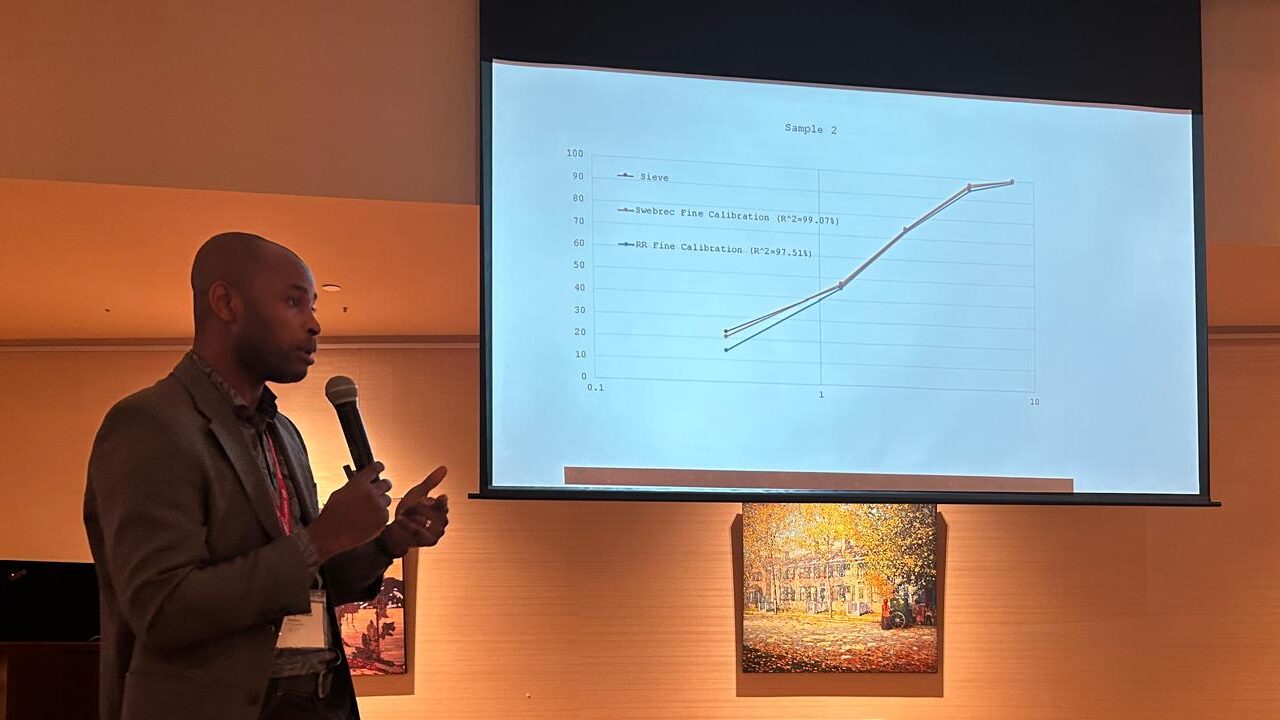
WipWare Technical Specialist Blessing Taiwo returned to the Central Ontario Canadian Mineral Processors (CMP) Conference & AGM on November 5, 2026, in Sudbury, Ontario, to present research on the challenges of measuring fine particles through optical fragmentation analysis.
His presentation, Fragment Size Segregation and Fines Occlusion in PSD Measurement: Past, Present, and Future, explored how particle segregation and hidden fines affect particle size distribution (PSD) results, and how calibration methods can improve agreement between optical measurements and laboratory sieve analysis.
The conference brought together mineral processing professionals, consultants, researchers, and technology providers for a day of technical presentations, industry discussions, and networking.
Understanding Hidden Fines in Particle Size Measurement
Optical fragmentation analysis provides a practical way to assess particle size distributions across mining and mineral processing operations. However, one important limitation is that image-based measurements primarily represent the visible material surface.
Blessing’s presentation examined two challenges that can affect the measurement of smaller particles: insufficient image resolution and particle occlusion.
Occlusion occurs when smaller particles are concealed beneath or between larger fragments. Material movement and vibration can also create size segregation, where larger particles migrate toward the surface while finer material moves downward. This behaviour, commonly known as the Brazil Nut Effect, can cause the visible surface distribution to differ from the overall material distribution.
These effects are particularly relevant when measuring material on conveyors, in stockpiles, and throughout crushing and handling operations.
Key Takeaways from the Presentation
- Visible particles do not always represent the full PSD. Optical measurements are affected by particle visibility, image resolution, and the physical arrangement of material.
- Segregation can influence results. Vibration, handling, and material movement may redistribute particles by size, creating differences between surface measurements and the bulk material.
- Physical sampling remains important. Laboratory sieve analysis and representative belt-cut samples provide reference data for evaluating and calibrating optical measurement results.
- Calibration can improve agreement between methods. Reference-based mathematical models can account for fines that are not directly visible, helping produce a more representative estimated distribution under suitable application conditions.
The presentation also reviewed the development of PSD calibration models, including the Rosin–Rammler and Swebrec distributions and the more recent xP-fan model.
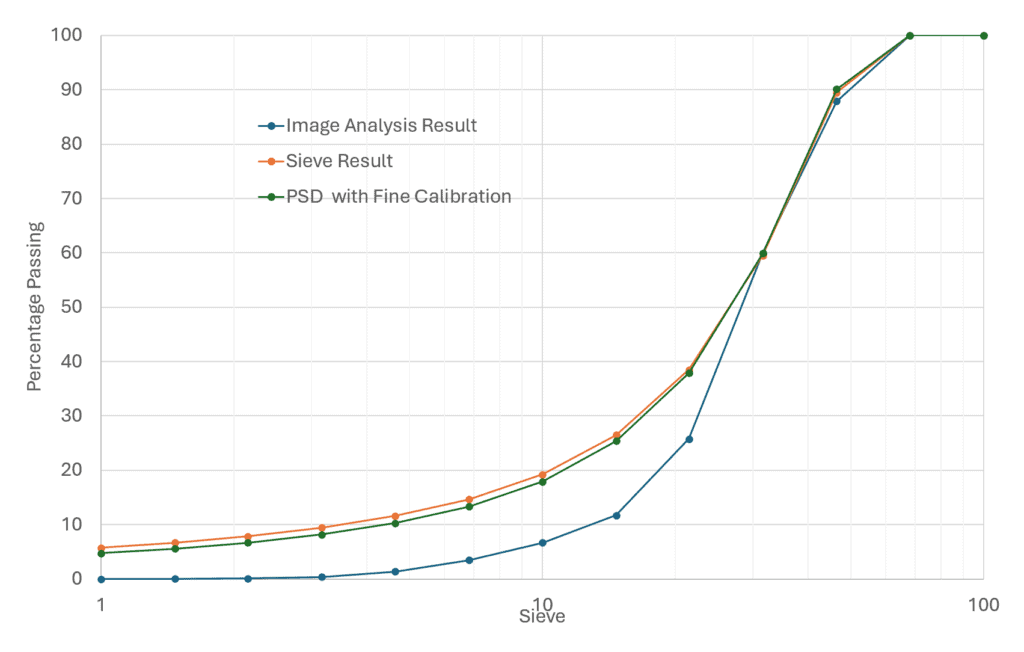
Through several comparative examples, Blessing demonstrated how calibration can bring image-based PSD curves closer to laboratory sieve results. In one example, the uncalibrated image analysis reported 24.7% passing at 1.5 mm, compared with 45.6% from sieve analysis. Following calibration, the estimated passing percentage was 45.2%.
These comparisons reinforce the importance of selecting appropriate measurement methods, obtaining representative reference samples, and understanding the limitations of each approach. Calibration helps estimate material that is not directly visible; it does not replace physical measurement of those particles.
Industry Perspectives and Collaboration
Beyond his own presentation, Blessing attended technical sessions addressing a variety of mineral processing challenges and developments.
An interesting theme emerging from the presentations was the collaborative relationship between mineral processing operations and external technical specialists. Many operating sites work closely with engineering consultants, researchers, and technology providers to investigate process challenges, evaluate performance, and implement improvements.
These partnerships combine the practical experience of onsite personnel with specialized expertise from across the industry.
For Blessing, the presentations offered valuable insight into how technical knowledge and consulting expertise are applied to real operating challenges. The discussions following the technical sessions also provided opportunities to exchange perspectives and connect with other industry professionals.
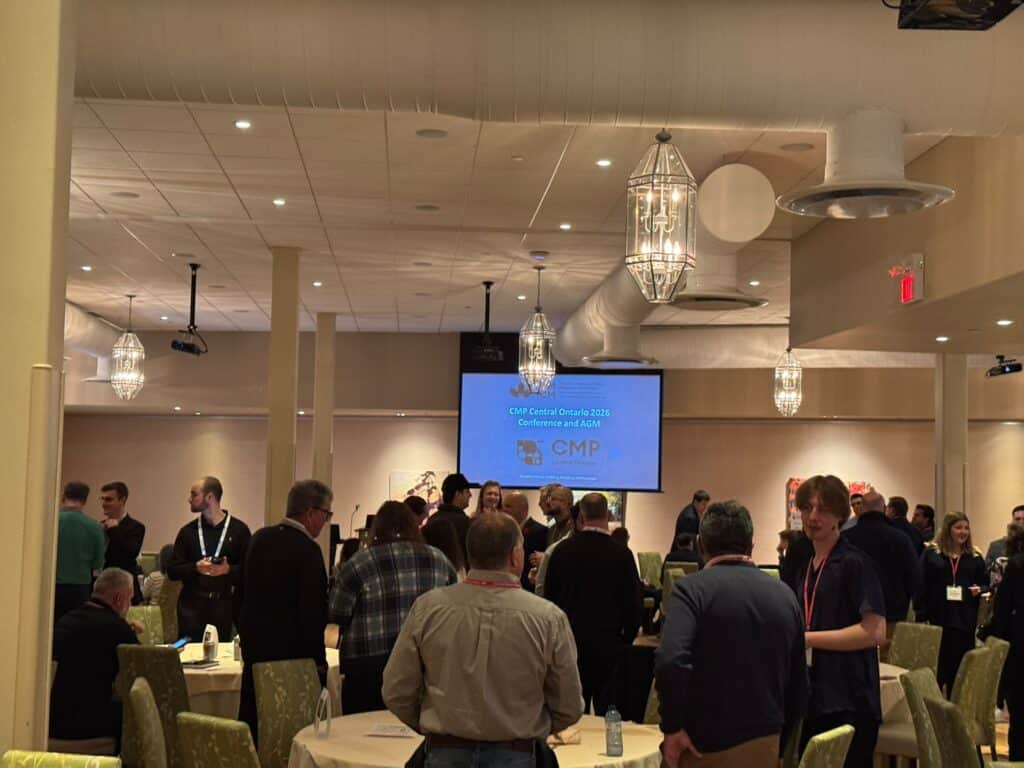
The conference concluded with an evening reception and dinner, allowing participants to continue conversations and build relationships beyond the formal presentations.
WipWare thanks the Central Ontario CMP organizers and fellow participants for another opportunity to share technical knowledge, learn from industry peers, and contribute to discussions about the future of mineral processing.
For more information on the measurement considerations discussed during the presentation, explore WipWare’s Understanding Size Ranges in Conveyor Belt Analysis guide.
 WipWare