Author: Kim Coyle

WipFrag

WipFrag 4 New Features

Heat Map with colours from blue to red rocks

A Quick Summary on WipFrag version 4 and its New Features

Overview

Mining is the extraction of valuable materials called ore or sometimes industrial minerals from the earth crust, using appropriate technology with the aim to provide raw materials for industrial use.

The materials exist in massive form and must therefore be broken into handable size through blasting operation or other safe and productive ways. The use of explosive to break rock into smaller sizes had been adopted several years due to it well know advantages.

Image analysis had been proven as the way forward to enhancing blasting and improving downstream operation efficiency through accurate visualization. Image analysis is a technique use to evaluate blasting output and to monitor material flow during mineral processing.

WipFrag Image Analysis software is a powerful tool for analyzing particle size distribution (PSD) in digital images collected from various blast muck-pile, including fresh phase muckpiles after blasts, time series stockpile samples, and even drone or UAV images.

Features and Advantages

Let’s delve into its features and advantages:
1. Instant PSD Analysis: WipFrag 4 provides instant PSD analysis of the captured images. Whether you’re assessing post-blast muckpiles or analyzing stockpile samples, this software delivers accurate fragmentation data.

Chart showing PSD analysis of material


2. Auto-Scaling Capabilities: With auto-scaling capabilities, WipFrag 4 ensures precise measurements. It’s a cost-effective solution that saves time and resources.

3. Cross-Platform Compatibility: Seamlessly analyze images across multiple platforms, including iOS, Android, and Windows. Share results effortlessly and optimize blast performance.

4. BlastCast Blast Forecast Module: This module, included in the software, helps predict fragmentation when used alongside WipFrag particle size data. It’s a valuable tool for blast planning.

5. Deep Learning Edge Detection: This amazing tool will increase accuracy from our previous Simple edge detection and almost eliminate the need to manually edit your images.

6. Integration with WipWare Photoanalysis Systems: WipFrag 4 also controls sixth-generation WipWare Photoanalysis Systems. Monitor conveyor belts or heavy-duty vehicles in real time, providing continuous particle size data to your portable device 24/7.

WipFrag Software Options Available

WipFrag 4 offers flexible licensing options to suit different operational needs, whether you require continuous blast fragmentation analysis or occasional assessments. Here’s a quick overview of what’s available:

1. Annual Subscription

Ideal for operations requiring consistent fragmentation analysis, the annual subscription allows up to 10 simultaneous device activations per license. This is a cost-effective solution for teams working across multiple sites or needing frequent analysis.

2. Pay-Per-Use (PPU) Option

For users who need WipFrag on a project basis or for occasional assessments, the PPU image credit is a great option. This model offers flexibility, enabling you to pay only when you use the software without committing to an annual plan.

3. UAV/Orthomosaic Image Analysis:

This is included in the annual subscription with unlimited analyses for the year. If credits are preferred, a minimum of 3 credits is required to unlock the analysis results. Number of credits is determine by hectare.

4. MailFrag Single or UAV/Orthomosaic Image Analysis:

MailFrag is our online service when customers need a third party to analyze their images. Single image analysis is 3 credits and UAV/Orthomosaic image analysis is a minimum of 9 credits based on hectare. MailFrag is only available for use with credits. It is not included as an option with the annual subscription.

Chart that shows pricing for WipFrag

Which License is Right for You?

If you’re unsure which license best fits your needs, contact us to discuss your application and explore the best solution for your operation. Whether you need continuous monitoring or occasional analysis, WipFrag has an option that works for you!

Remember that credits can be transferred to other WipWare Account users. Additionally, UAV/orthomosaic images must be analyzed with the Windows version and be in GeoTIFF format.
In summary, WipFrag 4 offers a cost-effective and accurate solution for fragmentation analysis, making it an essential tool for professionals in various industries.

Multiple Language Options

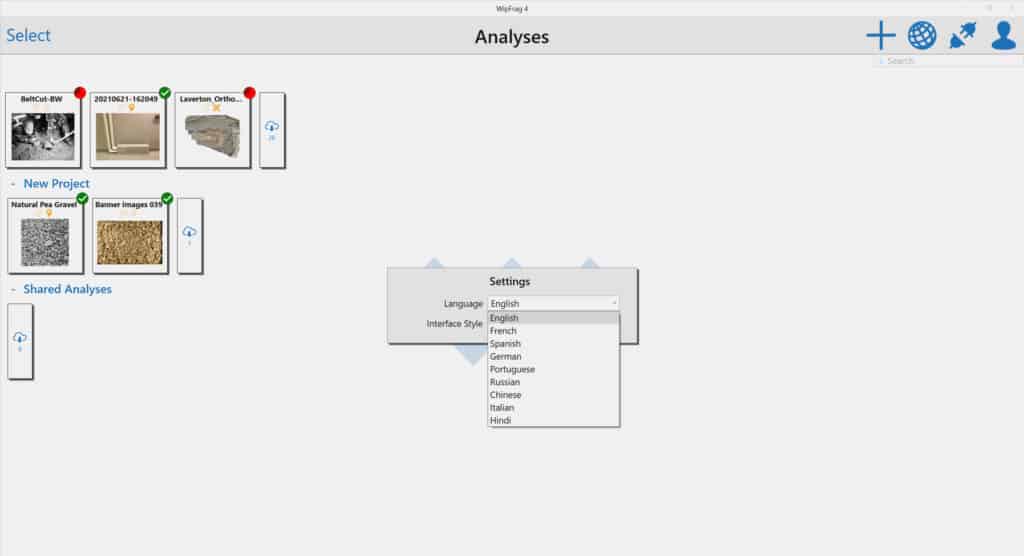
WipFrag 4 has multiple language options available for our customers. The following nine languages are now available:

English, French, Spanish, German, Portuguese, Russian, Chinese, Italian and Hindi.

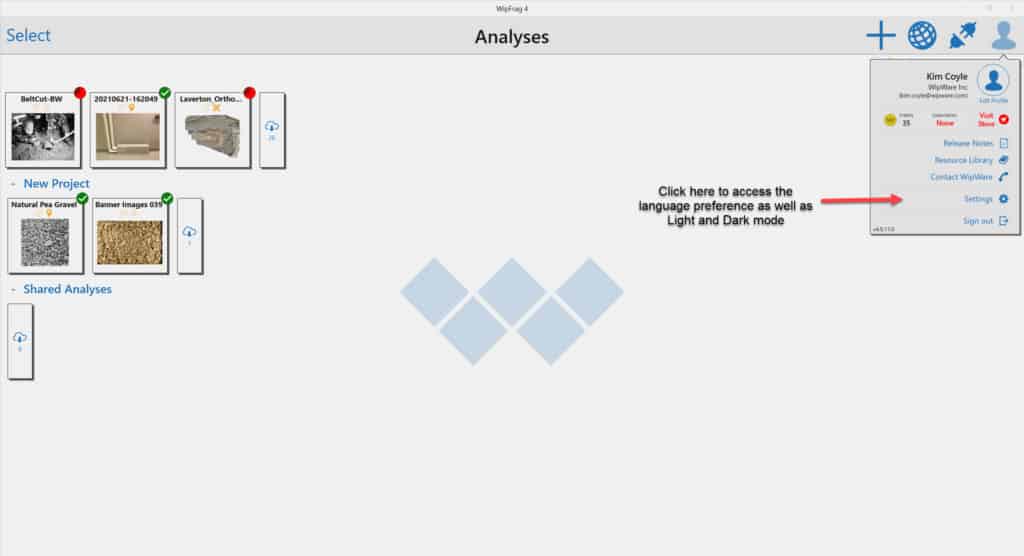
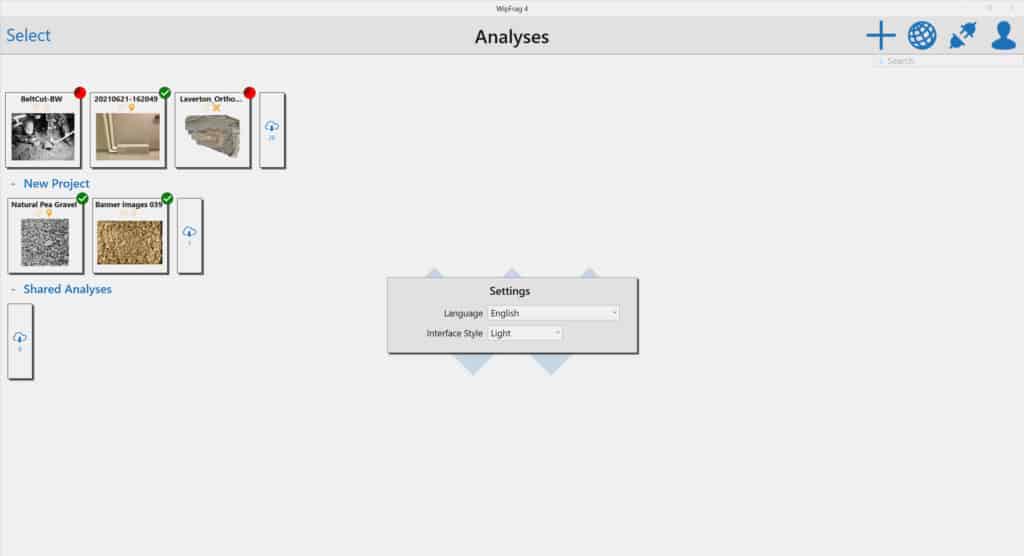
To change your language preference in WipFrag 4, please follow these steps:

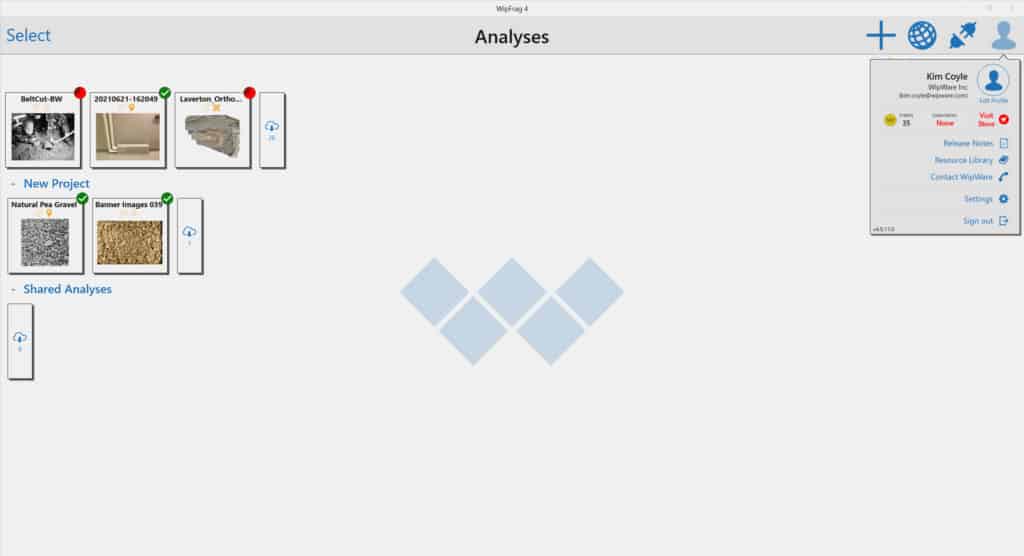
Click on your Profile Icon

Click on the Settings button

In Settings, click on Language to access the drop-down menu

In the drop-down menu, there are 9 language options available

For more information about our WipFrag 4 Image Analysis Software, please visit our WipFrag page.

Solo

Understanding Size Ranges in Conveyor Belt Analysis

How Low Can You Go?

One of the most common questions we receive is, “How small can you analyze?” The answer depends on multiple factors, but with the right imaging, WipWare’s systems can measure down to micron levels. However, when analyzing material on conveyor belts, additional considerations impact the minimum particle size that can be accurately measured.

Over the years, we’ve worked with a vast range of conveyor belt applications from highly quality-controlled 10-inch belts to massive run-of-mine conveyors that are several metres wide as is normally found in global copper, iron ore mine operations. Our fully adjustable frames are customized before shipping to ensure seamless integration into your operation.

Key Considerations for Conveyor Belt Analysis

When it comes to analyzing material on conveyor belts, a few fundamental factors come into play:

  • Fixed Camera Position – The camera is mounted at a consistent distance from the belt, usually within a metre or so (a few feet).
  • Controlled Lighting – Conveyor belt environments generally offer stable lighting conditions, improving image accuracy.
  • Material Spread – The material stream typically covers a predictable portion of the belt rather than the entire conveyor surface, allowing the camera to focus specifically on the material.
  • Controlled Flow – Conveyed material has a known source and destination and moves at a controlled speed and direction, making variables easier to control.

With these stable conditions, WipWare’s systems can precisely determine the size ranges they analyze for each application.

Real-World Examples

Let’s explore two real-world examples using WipWare’s Solo system:

CompanyABC CompanyXYZ Company
Material TypeCopperGold
Conveyor Dimensions3 metres / 10 feet1.2 metres / 4 feet
Analysis LocationPrimary crusher outputSAG mill feed
Detectable Sizes7.14 mm – 609.6 mm
0.2812 in (~#3) – 24 in
2.86 mm – 243.84 mm
0.1125 in (~#7) – 9.6 in

From the comparison table above, we see that ABC Company’s larger conveyor widths require the particle sizing system to be mounted higher to capture the full material spread. This setup means the system focuses more on coarser size fractions than fines – which is good: If a 3-metre belt is in use, and the material is raw primary crusher output, it’s unlikely that the material is 100% fines.

In contrast, Company XYZ deals with crushed and pre-screened materials, meaning the belt carries smaller particles. Since the conveyor is smaller in width, the system mounting height is closer to the material and can therefore analyze smaller size fractions.

Note: These are real-world examples with their own unique challenges which affect the detectable size range and goals which determine the focus of data collection. Your own application could have very different detectable size ranges depending on similar factors at your operation.

Expanding the Size Range: What are the options?

If you need to adjust the minimum or maximum detectable particle size, consider the following:

  1. Calibrate for Unseen Fines – Using sieve data and manual belt cuts to measure unseen and unresolvable fines and calibrate the system output accordingly. This is good for known and predictable material streams.
  2. Reduce the Field of View – Narrowing the system’s focus by adjusting the position or changing the type of lens used to view a smaller area. This in turn may limit the ability to capture coarser sizes.
  3. Increase Camera Locations – Using multiple cameras on the same material stream to capture different ranges of material, ie. a “fines” camera and a “coarse” camera.
  4. Tailored Solutions for Your Operation – The technology itself can change for your specific needs, such as increasing the camera resolution or changing the mounting solution.

If you’re wondering how effective a WipWare analysis system would be for your operation, contact us! Our technologies have helped mining operations worldwide achieve better process control.

Have a unique application? We love a challenge — send us the details, and we’ll be happy to assist!

Installations

Literature Review: Application of WipWare Technology

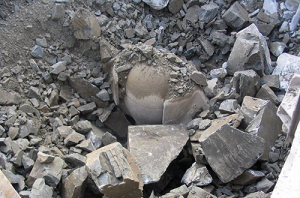
Blast on a bench face

WipWare’s fragmentation analysis technologies have been widely applied across various mining operations to solve critical challenges. These were associated with material flow, fragmentation consistency, energy use, and overall process efficiency. I came across Tom Palangio‘s works on numerous case studies highlighting the effectiveness of WipWare‘s tools. These tools optimized blasting practices and downstream processing. This review presents a summary of several influential studies and industrial applications of WipWare technology.

Photographic Fragmentation Analysis

Selbaie Mine, Joutel, Quebec, Canada

In the mid-1990s, Selbaie Mine utilized photographic fragmentation analysis using WipFrag to assess explosive performance and optimize blasting patterns. The integration of WipWare technology enabled the mine to monitor and control several key performance indicators. Some of these indicators included energy consumption for crushing, loading rates, haul truck payloads, secondary blasting costs, and maintenance expenditures. Fragmentation data revealed a more comprehensive understanding of the effects of blast results on overall mining cost structures. This information allowed the mine to better manage ore processing operations. They could quantify the true cost of mineral handling based on fragment size.

Significant Pattern Optimization

INCO Coleman Mine, Sudbury, Ontario, Canada

INCO’s Coleman Mine used WipFrag during a detailed study in 1994, resulting in significant pattern improvement. The original tight blast pattern (5ft x 10ft) yielded a characteristic size (Xc) of 0.617 m, with substantial oversize material requiring re-blasting. Progressive expansion of the blast pattern to 6ft x 10ft and eventually 7ft x 10ft not only improved fragmentation (Xc = 0.318 m) but also reduced oversize entirely. WipFrag data was instrumental in determining optimal fragmentation, with INCO realizing up to 40% blast pattern expansion and 80% cost savings. Additionally, the technology allowed for reductions in fines generation, further streamlining ore handling and improving crusher feed quality.

Correlate Ore Fragmentation and Hardness with Mill Performance

Highland Valley Copper, Logan Lake, British Columbia, Canada

At Highland Valley Copper (HVC), the team used WipWare tools to correlate ore fragmentation and hardness with mill performance. WipWare’s WipFrag software, Reflex vehicle analysis system and Solo conveyor analysis system played a central role in tracking ore size distributions from the pit through to the mill feed. This enabled real-time optimization of crusher and mill settings. The mine’s dispatch system integrated fragmentation data to guide stockpile management and minimize feed segregation. WipFrag analysis revealed that feed consistency across the grinding lines could be improved by adjusting feeder ratios. This capability to quantify fragmentation effects allowed HVC to perform cost benefit analyses and optimize the balance between blast quality and mill throughput.

Detonator Timing Accuracy and Improved Fragmentation using WipFrag

Bartley and Trousselle – Ogdensburg, New York, USA

At Benchmark Materials Quarry, Bartley and Trousselle demonstrated the link between detonator timing accuracy and improved fragmentation using WipFrag. Digital programmable detonators yielded superior blast uniformity and reduced vibration levels. WipWare’s image analysis facilitated the evaluation of blast performance improvements by providing accurate fragmentation size distribution data.

The Effects of Improved Fragmentation on Mechanical Performance and Power Usage in the Crushing Circuit

Lafarge Canada Inc. – Exshaw, Alberta, Canada

Lafarge’s Exshaw operations applied WipFrag to examine the effects of improved fragmentation on mechanical performance and power usage in the crushing circuit. A redesigned blast using 102 mm holes led to more uniform fragmentation. This resulted in a 16% increase in crusher throughput and a 30% reduction in power consumption. WipWare data also informed decisions related to equipment selection (e.g., drill bits) and wall control, leading to improved safety and reduced vibration impacts on neighboring communities.

Cost-Effective and Reliable Fragmentation Assessment Tool

Barkley and Carter – Evaluation of Optical Sizing Methods

Barkley and Carter evaluated WipFrag as both a cost-effective and reliable fragmentation assessment tool. Their work highlighted that previous blast optimization efforts were constrained by the lack of efficient sizing techniques. In contrast, WipFrag enables meaningful decision-making in blast modeling, mining method selection, and economic planning. The study underscored the significance of image-based sampling frequency, particularly in varied muck pile conditions, to derive actionable insights on crusher performance and feed consistency.

Assess Fragmentation and Stemming Uniformity

Chiappetta, Treleaven, and Smith – Panama Canal Expansion

During the expansion of the Panama Canal, WipFrag was employed to assess fragmentation and stemming uniformity in complex geological and logistical conditions. The integration of WipWare into blasting operations enabled engineers to both track blast outcomes and support adaptive design decisions in real time. In a project characterized by not only marine traffic but also saturated zones and tight deadlines, the technology provided essential support in achieving controlled fragmentation and predictable material handling.

Conclusion

These reviewed case studies emphasize WipWare’s critical role in improving the efficiency and economics of mining operations. Through accurate and real time fragmentation analysis, WipWare technologies facilitate optimization across the mine to mill value chain. From reducing energy consumption and equipment wear, to improving blast designs and minimizing fines, WipWare’s technologies offer robust solutions to a range of material flow problems in both surface and underground mining environments. These outcomes underscore the value of fragmentation analysis in modern mining practice, unquestionably supporting data-driven decision making and continuous process improvement.

By Blessing Taiwo

WipWare

WipWare Proudly Celebrates Over 30 Years of Innovation

From a dusty DOS computer to AI-powered, real-time fragmentation analysis systems… WipWare has been at the forefront of fragmentation analysis for over 30 years of innovation, transforming how the world measures particle size.

The Beginning

From humble beginnings to global impact, we’ve come a long way. This year, we’re celebrating over 30 years of innovation in fragmentation analysis. Along the way, we’re taking a look back at the milestones. These milestones shaped us and the journey of making particle size analysis smarter, faster, and easier than ever.

Before WipWare was WipWare, our founder Tom Palangio was in the field with North Bay DuPont. He was tackling real-world challenges with innovative thinking and a practical mindset.

Below is a photo of Tom from our archives. He was working on a project that would spark the idea for our very first product in fragmentation analysis: WipFrag.

Tom Palangio with a hard hat on standing with cameras by a muckpile of rocks. Mining innovation

Solving a Global Problem

Traditionally, describing blast results in mines and quarries was limited to vague terms like “good,” “fair,” or “poor.” Manual sieving and particle counting were too costly and impractical until a team of passionate pioneers changed the game.

WipFrag was born in 1986 from groundbreaking collaboration between Franklin Geotechnical, DuPont/ETI, and the University of Waterloo. It was the world’s first digital image analysis software for measuring rock fragmentation.

Three images of rocks from a muckpile, one with a measuring tape, 4th image is the particle size distribution curve from first versoion of WipFrag

Leveraging advancements in imaging and computer processing, they created a revolutionary tool. A digital method to analyze muckpile photos or video frames to produce a detailed fragmentation size distribution curve.

The name itself carries the legacy: Waterloo Image Enhancement Process for Fragmentation or “WIEP,” later shortened to just “WipFrag.”

Since then, our journey has been marked by bold ideas, hard-earned field experience, and a commitment to excellence that has brought us to where we are today. Tom Palangio, with his explosive expertise, innovative leadership, and close collaboration with Dr. Norbert Maerz and Dr. John Franklin laid the groundwork for much of what we now take for granted in automated material analysis.

First Trials

Thanks to real-world testing in 1980s-1990s at INCO’s Copper Cliff and Coleman underground operations and Highland Valley Copper in BC, WipFrag proved its worth boosting productivity, reducing oversize, and optimizing blast patterns. Results included a 40% pattern expansion and 10% increase in mill throughput milestones that cemented WipFrag’s value in the mining industry.

We owe this innovation to the visionaries who asked, “What if we could measure fragmentation automatically?” and then made it possible. Hats off to the original developers and researchers whose dedication paved the way for what WipWare is today, 30 years strong and still leading the future of photoanalysis technology.

WipJoint and System 1

In 1990, WipJoint was introduced for measuring in-situ rock apparent block size and joint orientation.

Our journey into real-time automated analysis systems began in 1998, led by Thomas W. Palangio, the founder’s son, as he joined the company and introduced our first hardware systems. System 1 was released in 1998 with one camera for online analysis: a well-received innovation for the mining industry. The very next year, System 2 was rolled out, boasting the capacity to integrate 12 cameras for real-time analysis.

Then another year later in 2000, WipFrag 2 was developed, building on the success of the first WipFrag.

WipWware Team showing very first Solo system

In this 2007 photo, WipWare team members gather around the first Solo system — a major step forward in automated material analysis. Originally built for conveyor belts and later adapted for vehicle loads, this early unit was the seed of what would become today’s Solo 6 and Reflex 6 systems — smarter, faster, and tougher than ever.

Pictured here are two faces still leading WipWare forward today:

  • Thomas Palangio (right), now our Chief Technical Officer and Vice President of Technology
  • Kevin DeVuono (back right), now our Head Programmer

WipFrag 3 joined the arsenal in 2014 with drone and GIS capabilities, serving as HMI for our real-time analysis systems. With WipFrag now in the palm of your hand since 2016, WipWare makes it easier than ever for field personnel to assess blast fragmentation instantly, anywhere, anytime and share it across platforms for end-to-end mine-to-mill optimization.

WipFrag Goes Mobile

In 2016, WipWare brought WipFrag to mobile devices — putting fragmentation analysis directly into the hands of field personnel.

For the first time, users could capture and process muckpile images using the camera on their phone or tablet, with the option to sync and share results across devices for further analysis.
This leap in accessibility made data collection faster, easier, and more flexible — using tools people already carried with them.
Designed for the real world — and it redefined the standard.

Pit to Plant Fragmentation Analysis

In 2018 Tom Palangio, President of WipWare enjoyed an interview with The Crownsmen Partners at the CIM in Vancouver. During this interview, Tom discussed how innovation, being a disruptor in the early years and providing excellent leadership has shaped WipWare into the company it is today.

WipFrag 4 Released in 2020

In 2020, WipFrag became easier than ever for field personnel to assess blast fragmentation instantly, anywhere, anytime and share it across platforms for end-to-end mine-to-mill optimization.

WipFrag iOS user at muckpile

Fast forward to today, under the technical direction of Thomas Palangio (CTO), the company continues to redefine industry standards. His creativity, technical drive, and future-forward thinking have powered the evolution of Solo, Reflex, and WipFrag, now enhanced with Deep Learning Edge Detection for unparalleled accuracy across all environments.

From a garage in Bonfield, to a global leader in real-time fragmentation analysis – 30 years of innovation and engineering smarter solutions for the world’s toughest industries.

Since 1995, we’ve been shaping the future of mining technology with groundbreaking tools like WipFrag, Solo, and Reflex. Along the way, we’ve helped change how the industry collects and understands data. Today, we’re using edge-powered, AI-driven systems on conveyors and vehicles, even underground.

WipWare continues to provide the industry with powerful tools to help companies monitor, measure and manage their materials the smart way. Our state-of-the-art arsenal of analyzers measure particle size, shape, volume and colour data in real-time on conveyor belts and vehicles. Our comprehensive software is useful anywhere to instantly determine particle size and shape distribution without using a scale object.

Always Evolving, Always Innovating

But we’re not done — today our tools continue to evolve.

We’re enhancing the way our systems capture material composition and volume — bringing deeper insights to operations of every size. Plus, we’re refining how data becomes decision-making power. And now we’re working to bring that same clarity everywhere from underground to outer space.

Thank you to our technical team, whose work ensures every system and line of code is field-ready and rock solid.

Thank you to the innovators whose commitment, structure, and continuity make every innovation sustainable and scalable!

And most importantly, to our clients, resellers, and partners around the world — thank you for 30 incredible years. Here’s to what’s next. YOU are the reason our WipWare Team continues to push boundaries. Your trust, feedback, and collaboration fuel the team purpose. Whether you’re analyzing underground ore, surface muckpiles, aerial drone images, conveyor material, or vehicle loads, your success is our mission.

Here’s to 30 years of innovation, reliability, and excellence… And to the next decades of digital transformation in mining and material handling.

Northern Ontario Mining Showcase North Bay & District Chamber of Commerce CIM/ICM Northern Gateway Branch MineConnect

WipFrag

Drilling and Blasting Charge and Design

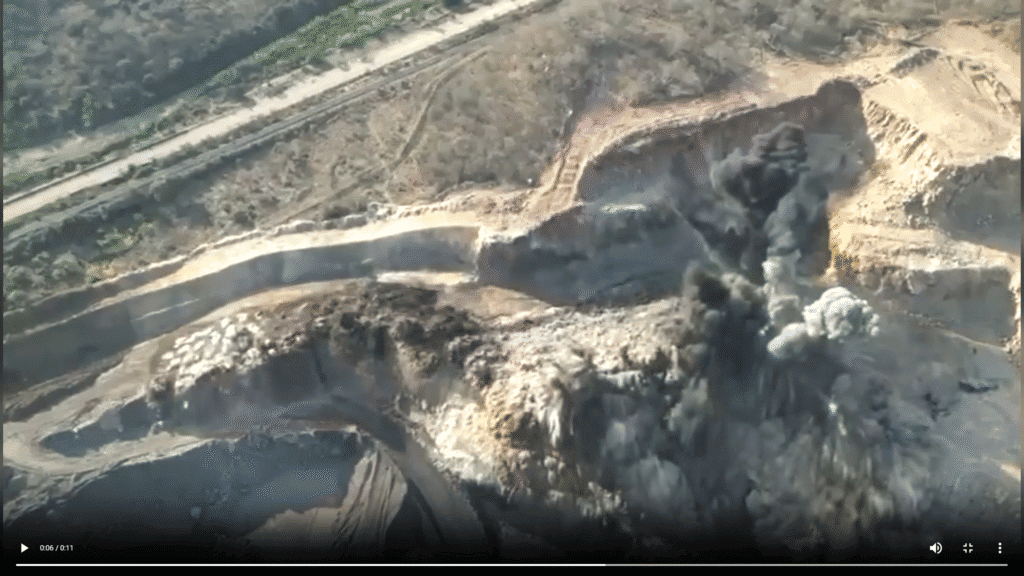
Blasted rock flying into the air Drilling and blasting

Introduction

Part 1

Efficient drilling and blasting design is fundamental to achieving optimal rock fragmentation, cost control, and downstream productivity. The first step in designing an effective blast is selecting appropriate geometrical parameters based on rock properties, explosive characteristics, and site-specific conditions. This article introduces initial design ratios that can be used as first approximations in blast planning, keeping in mind that adjustments are necessary as field data is collected.

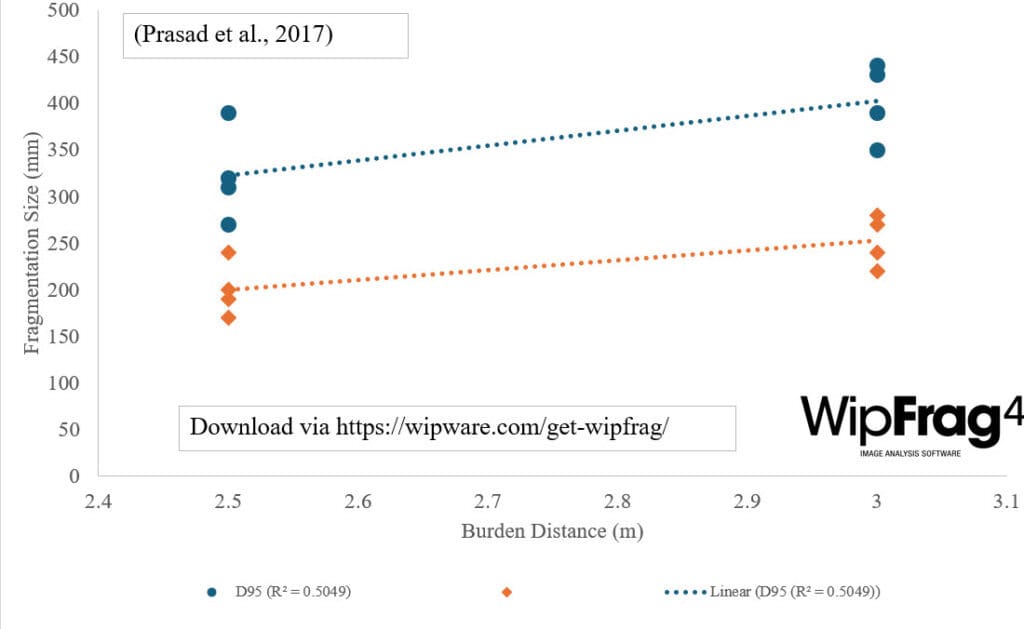
1. Burden Estimation

The burden is distance between a blasthole and the free face is influenced by rock density and explosive diameter. Initial guidelines suggest:
Light rock (2.2 g/cc): 28 × explosive diameter
Medium rock (2.7 g/cc): 25 × explosive diameter
Dense rock (3.2 g/cc): 23 × explosive diameter
These values can be refined based on fragmentation feedback and in-situ rock behavior.

2. Spacing Between Holes

Spacing ensures uniform energy distribution and reduces overlap or gaps between blast effects:
Instantaneous firing by row: 1.8 – 2.0 × burden
Large-diameter holes (sequential): 1.2 – 1.5 × burden
Small-diameter holes (sequential): 1.15 – 1.8 × burden

3. Bench Height

Bench height depends on operational scale and burden:
Typical range: 1.5 – 4.0 × burden, or higher in some cases.

4. Sub-Drilling

Sub-Drilling ensures complete breakage at the toe, especially important in stratified or dense formations:
Flat bedding at toe: 0.0 – 0.1 × burden
Easy toe: 0.1 – 0.2 × burden
Medium toe: 0.2 – 0.4 × burden
Difficult toe (vertical bedding): 0.5 × burden
General view: (3 to 15) x D

5. Stemming Column Length

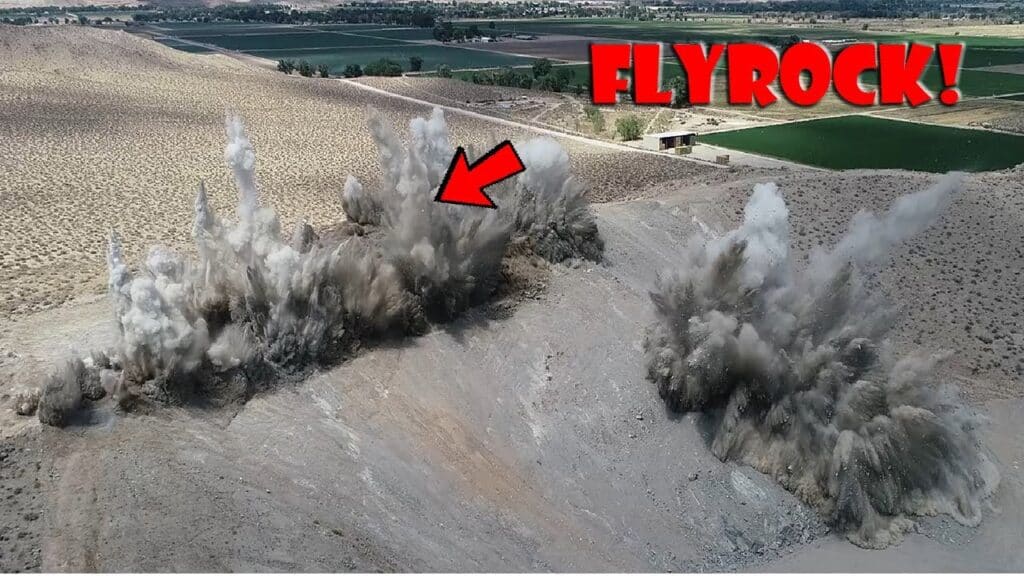
Stemming retains explosive energy in the hole and controls flyrock:
General range: 0.5 – 1.3 × burden
Increase multiplier for wet holes or if drill cuttings are used
Decrease multiplier for dry holes or if angular chips are used
For extremely cautious blasting (no throw or flyrock):
Use up to 36 × hole diameter for stemming
Deck delay stemming lengths:
Dry holes: 6 × hole diameter
Wet holes: 12 × hole diameter
Stemming material size = D/10 to D/20

6. Burden Stiffness Ratio (Sr)

=H/B : 2 to 3.5 good fragmentation
 Sr> 3.5 very good fragmentation
Control Blast design
Presplit blasting
Spacing = Hole diameter x 12
Burden = 0.5 x production blast burden (B)
Uncharged length at top = 10 x D
Powder factor = 0.5kg per square metre of face
Smooth Blasting
Spacing = 15 x Hole diameter (hard rock)
20 x Hole diameter (soft rock)
Burden = 1.25 x Spacing
Rock type PF (kg/m3)
Hard 0.7 – 0.8
Medium 0.4 – 0.5
Soft 0.25 – 0.35
Very Soft 0.15 – 0.2

Conclusion

These ratios serve as a starting framework in blast design. Each site’s geological characteristics and performance feedback should guide further optimization. In Part 2, we will explore charge distribution, and initiation to refine blast performance further.
Bibliography
Dyno Nobel Blasting and Explosives Quick Reference Guide 2010
Video credit to Chris Addicott

Understanding the Interaction between Blast Controllable Parameters and Explosive Energy Distribution

Part 2

In surface and underground mining operations, achieving optimal fragmentation and downstream efficiency depends largely on how well explosive energy is distributed throughout the blast zone (Zhang et al., 2023). For drilling and blasting engineers, this distribution is not random, it is directly influenced by the status of controllable blast parameters.

1. Hole Diameter and Burden/Spacing

The size of the blasthole plays a central role in determining the energy per unit volume of rock (powder factor). Larger holes allow for higher explosive loading, but without proper adjustment of burden and spacing, energy may either vent prematurely or be insufficient to break the rock mass effectively. A well-balanced burden and spacing ensures that the explosive energy is confined and directed where it is most effective within the rock’s natural weaknesses.

2. Stemming Length and Type

Stemming acts as a confinement mechanism, and its length determines how much energy is retained to do useful work (fragmentation) versus lost to the atmosphere (airblast and flyrock). Too short a stemming column leads to excessive energy release upwards, reducing breakage efficiency. The stemming material also matters; inert and high-friction materials retain energy better than loose or damp fill.

3. Explosive Type and Density

Different explosives have varying detonation velocities and energy outputs. Choosing an explosive with suitable characteristics for the rock type and desired fragmentation outcome ensures that the energy is neither excessive (leading to fines and overbreak) nor insufficient (resulting in boulders and poor fragmentation). Additionally, the density of the explosive affects how much energy is loaded per unit of borehole length.

4. Initiation Sequence and Timing Delays

The sequence and timing of detonation determine how energy is transferred between holes and how the rock mass reacts dynamically. Proper delay timing ensures effective burden relief and sequential rock movement, promoting efficient energy transfer and reducing the risk of airblast and ground vibration.

Conclusion

Blast controllable parameters are not isolated design factors, they work in concert to shape how explosive energy is distributed and utilized.

Things to Know About WipFrag

WipFrag 4 is a powerful image analysis tool used to assess blast results by evaluating particle size distribution from blast muckpiles images. It helps determine fragmentation quality, boulder presence, and crusher compatibility. With tools like specification envelope, Edit Assist, and autoscale, WipFrag 4 supports continuous blast monitoring and optimization, enhancing productivity and reducing oversize-related costs.
Click HERE to download and learn on the demo for free.

“Blast safely with proper PPE”

The Importance of Bottom Charge and Energy Distribution in Blasting

Part 3

In surface and underground mining operations, achieving optimal fragmentation through effective blast design is key to operational efficiency. One critical yet often underappreciated aspect of blast design is the bottom charge the portion of explosive placed at the bottom of the blast hole and how it contributes to energy distribution within the rock mass.

What is Bottom Charge?

The bottom charge, also known as the column base charge, is typically a higher-density explosive or a concentrated portion of the total charge placed at the toe of the hole. Its main function is to initiate breakage from the bottom up, ensuring that the entire burden is effectively fractured and displaced.

Why It Matters

1. Crushing and Fragmentation at the Toe

The toe region is the most resistant part of the burden. Without adequate energy at the bottom, poor fragmentation or even toe problems (hard toe) may result. A well-calculated bottom charge ensures that this area receives enough energy to initiate crack formation and propagation.

2. Improved Energy Distribution

Uniform energy distribution along the blast hole is vital. Concentrating more energy at the bottom allows better stress wave propagation, reduces energy loss into air gaps or stemming zones, and leads to more consistent fragmentation throughout the burden.

3. Reduction of Fly Rock and Overbreak

A well-designed bottom charge reduces uncontrolled energy release at the top of the hole, minimizing fly rock and overbreak. This promotes safer and cleaner operations, especially in populated or infrastructure-sensitive areas.

A Simple Step-by-Step Calculation for Bottom Charge Quantity

1. Determine the hole diameter
 Let’s assume:
2. Hole diameter d=102 mm=0.102 m
3. Cross-sectional area of the hole (A):
A = (pi*d*d)/4
A= 0.00817m^2
4. Explosive density (ρ): Assuming ANFO ρ=850kg/m^3
5. Determine bottom charge length
Let’s assume:
Bottom charge length (Lb)=1.2 m
6. Calculate the bottom charge (mass)
Bottom charge mass=A×Lb​×ρ=0.00817×1.2×850≈8.33 kg
What determine the bottom charge length?
Rock
hardness and strength, Hole diameter, decking strategy, Bench height, Desired fragmentation and toe breakage, Stemming length, Water presence in the hole, Desired throw or displacement, Blast pattern, geometry, etc. The role of the bottom charge goes beyond merely initiating the blast.

WipFrag enables accurate fragmentation analysis from blast images, providing essential data for evaluating blasting effectiveness. It supports continuous improvement by identifying oversize issues, optimizing blast designs, and ensuring crusher compatibility. With real-time feedback and specification envelopes, it enhances decision-making, and improves overall mine-to-mill performance efficiently.
Read a case study paper HERE
Video credits to Goran Petrovic


WipWare

Understanding P80 in Crushing and Material Processing

Introduction

In the field of mineral processing and comminution (crushing and grinding), accurate size analysis is essential for optimizing the performance of crushing circuits and downstream processing units. Effective rock breakage using explosive energy requires a well-optimized blast design to ensure the energy is directed into the rock mass for maximum fragmentation and minimal waste. A properly executed design enhances breakage efficiency, improves downstream processing, and produces consistent material sizes measurable through Particle Size Distribution (PSD), which represents the proportion of different particle sizes within a fragmented material sample. One of the most critical parameters used in particle size distribution (PSD) analysis is P80, which stands for the particle size at which 80% of the sample material passes. This article discusses the definition, importance, and application of P80 in the crushing process and overall mineral processing operations.

What is P80?

P80 refers to the particle size (usually expressed in micrometers or millimeters) at which 80% of the sample’s mass passes through a given screen size. It is derived from the particle size distribution curve and provides a representative measure of the overall coarseness or fineness of a crushed or ground product.

For example:

  • If the P80 of a crushed ore is 120 mm, it means that 80% of the mass of that sample will pass through a 100 mm screen.

How is P80 Determined?

P80 is typically determined through:

  1. Sieve Analysis: The material is sieved using a stack of screens of decreasing mesh size. The cumulative mass retained is plotted to generate the PSD curve.
  2. Automated system: In automated systems like WipFrag 4, Reflex 6, and Solo 6, image-based particle size analysis can generate PSD curves without physical sieving, using photoanalysis techniques.
Chart showing PSD analysis
crushing and grinding, mineral processing

Importance of P80 in Crushing and Mineral Processing

1. Crusher Design and Operation Control

The efficiency of crushers and grinding mills is largely influenced by the target P80:

  • Primary crushers may target a P80 of around 100–150 mm.
  • Secondary crushers aim for a P80 of 20–40 mm.
  • Grinding mills (ball or SAG mills) often target a P80 of 75–150 µm for mineral liberation.

Setting and monitoring a P80 helps ensure the crushing process delivers the required product size for efficient downstream separation.

2. Grinding Circuit Efficiency

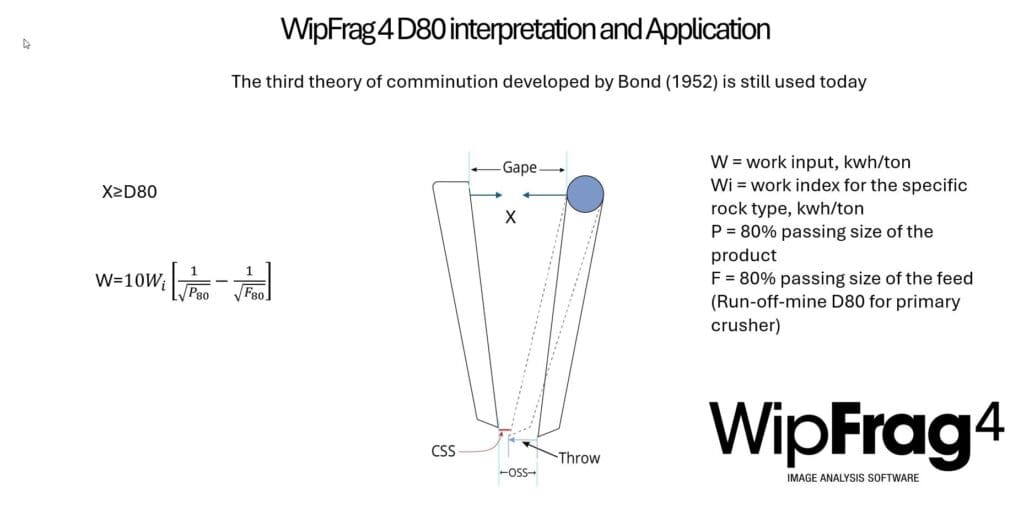
The Bond work index (BWI) is a well-known method used when selecting comminution equipment, to evaluate the grinding efficiency and to calculate the required grinding power (Nikolić et al., 2021). Determining the BWI is part of the design phase of a mining plant and can significantly affect the design costs associated with comminution. Mining comminution processes are the most energy intensive, and also the area with the greatest potential for energy savings. Accurate determination of the BWI is essential for the proper design and estimation of the costs associated with the comminution process.

P80 is critical in the Bond Work Index (BWI) equation:

W=10×Wi×((P80^-0.5)−(F80^-0.5))

Where:

  • W is the energy required (kWh/t),
  • Wi is the Bond Work Index,
  • F80 is the 80% passing size of the feed,
  • P80 is the 80% passing size of the product.

This relationship shows how energy input depends on the size reduction from F80 to P80. Thus, optimizing P80 can reduce energy consumption and cost.

3. Liberation and Recovery

In mineral processing, liberation of valuable minerals is essential before separation (e.g., flotation, leaching, magnetic separation).

  • If P80 is too coarse, incomplete liberation may occur, reducing recovery.
  • If P80 is too fine, overgrinding may lead to slimes that reduce separation efficiency and increase reagent consumption.

An optimal P80 ensures maximum liberation with minimal energy and operating cost.

4. Crusher-Compatibility and Throughput

When processing material through a plant, particularly in multi-stage crushing, each unit must receive appropriately sized feed:

  • Oversized material can cause crusher choking or blockages.
  • Undersized material may result in under-utilization of capacity.

By targeting a consistent P80:

  • You ensure crusher feed compatibility.
  • You maintain steady throughput and minimize downtime.

5. Process Control and Optimization

In modern mineral processing plants, real-time monitoring of P80 allows dynamic control:

  • Adjusting crusher settings (CSS),
  • Managing screen decks or vibrating screen performance,
  • Automating grinding media addition in mills.

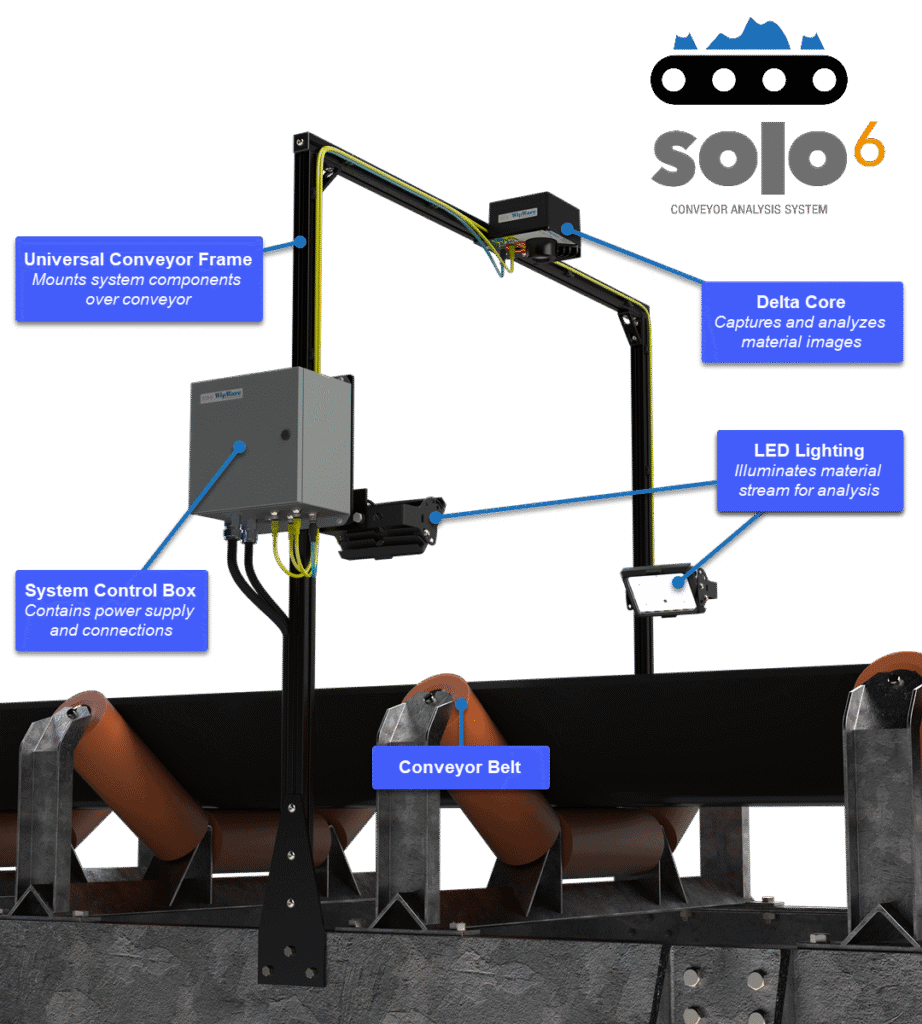
Image analysis tools likeSolo 6enable on-belt PSD analysis, providing operators with live P80 data for feedback control either before crushing or after crushing.

Conveyor analysis system over a conveyor belt
crushing and grinding
mineral processing

Factors Influencing P80

Several factors impact the actual P80 of a crushed or ground product:

  • Rock hardness and competency
  • Crusher/mill type and operating parameters
  • Blasting quality and fragmentation
  • Screening efficiency
  • Ore variability and moisture content

Continuous monitoring and adjustment are crucial for maintaining a consistent P80 under changing conditions.

Typical P80 Targets by Process Stage

Primary Crushing: 100 mm – 250 mm

Secondary Crushing: 20 mm – 80 mm

Tertiary Crushing: 5 mm – 20 mm

SAG Mill Discharge: 1 mm – 3 mm

Ball Mill Product: 75 µm – 150 µm

Flotation Feed: 106 µm – 150 µm

Leach Feed: 50 µm – 100 µm

Conclusion

P80 is one of the most significant performance indicators in crushing and material processing. It serves as a benchmark for:

  • Crusher performance evaluation
  • Grinding circuit design
  • Energy efficiency analysis
  • Liberation optimization
  • Quality control and process automation

A well-controlled P80 not only improves the economics of mineral processing but also ensures better recovery and operational stability. With the rise of automation and image-based analysis systems, monitoring and optimizing P80 has become more precise and actionable, empowering engineers and operators to make data-driven decisions.

Reference

Nikolić, V., & Trumić, M. (2021). A new approach to the calculation of bond work index for finer samples. Minerals Engineering, 165, 106858.

WipWare Solo 6 Conveyor Belt System Overview

en_USEN