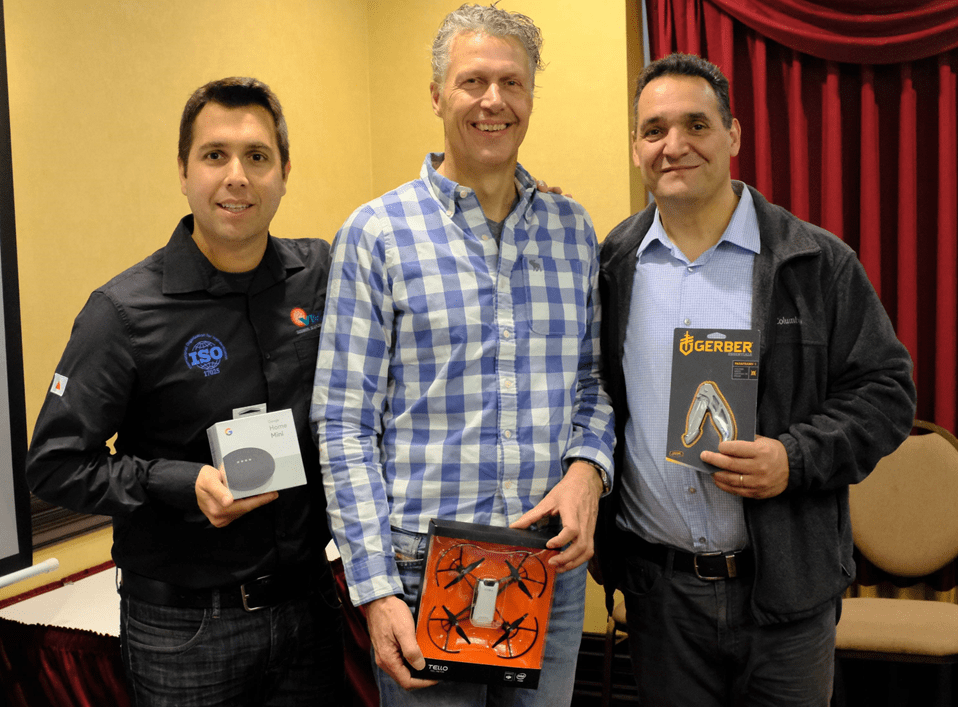
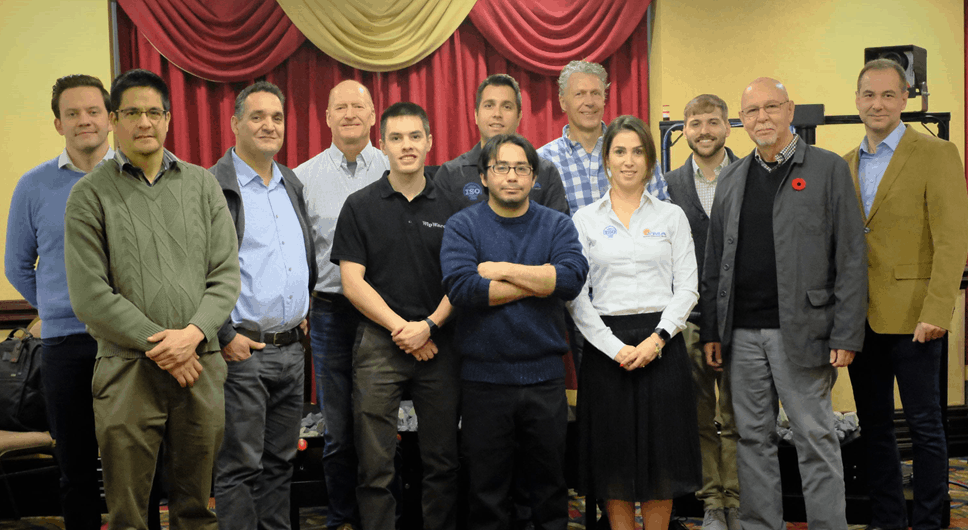
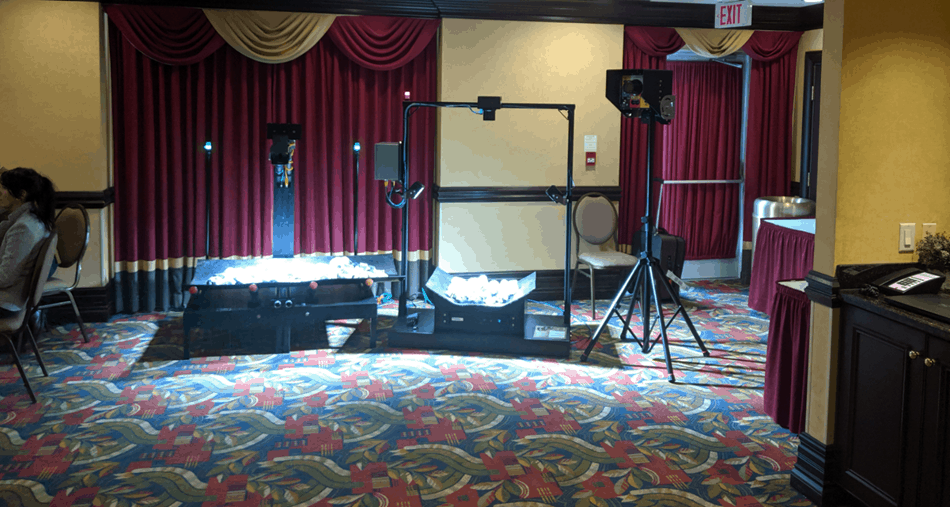
WipWare held their 6th WipWare Conference & Workshop from November 5-7th in Toronto. Many of our resellers and partners were in attendance. The 3-day conference and workshop involved presentations to help our partners and resellers view our new product line, get in-depth WipFrag information, have hands-on system and new product demonstrations.
The first day, a presentation of WipFrag was given which included information on the license versions available, Drones (UAV), Geographic Information System (GIS) and Human Machine Interface (HMI). WipWare’s Momentum System was also presented including the Conveyor camera type and the new Vehicle Camera Assembly.
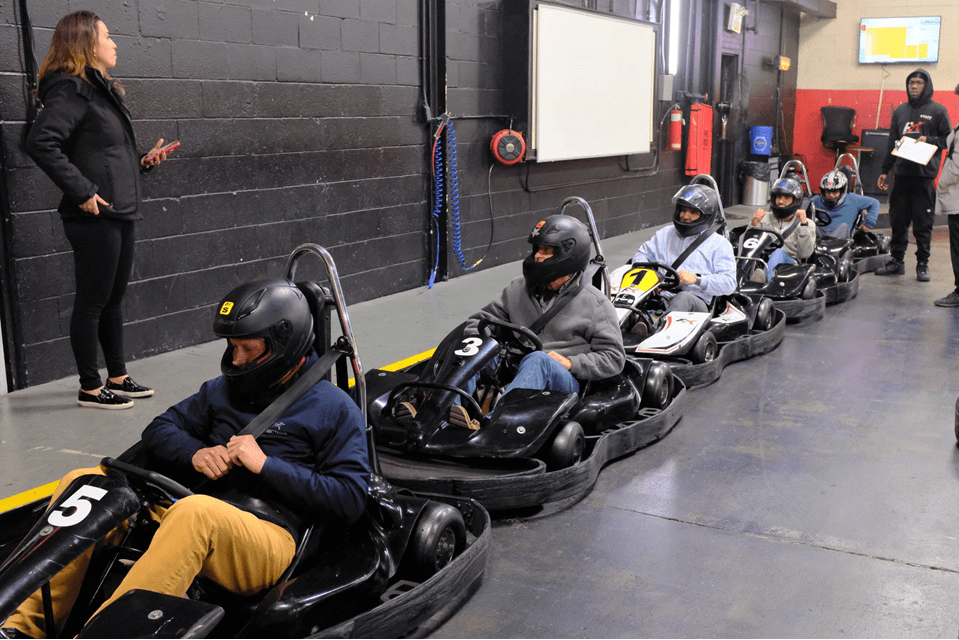
After a great day of presentations, everyone enjoyed dinner at Nando’s and and some Go Cart Racing at Formula Kartways .
The second day was dedicated to showcasing our Solo and Reflex 5th Generation Instruments and our new Vertex Instrument. Each participant also had the opportunity to do a presentation on their company’s products and services.
The end of the second day had another team building special event – Escape Rooms. Fun was had by all and some good laughs along the way with dinner at Ruth’s Chris Steakhouse
The final day allowed all participants to do an analysis of the conference and workshop and enjoy dinner at the CN Tower Restaurant.
Thank you to everyone for participating and making this event a great success!!
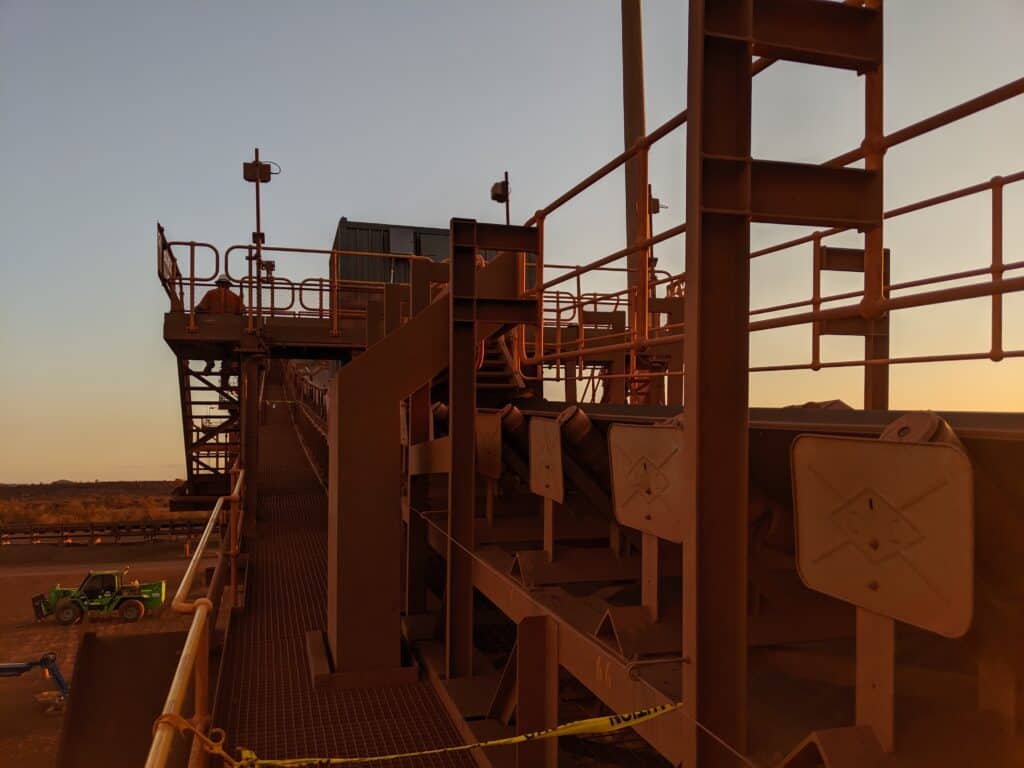
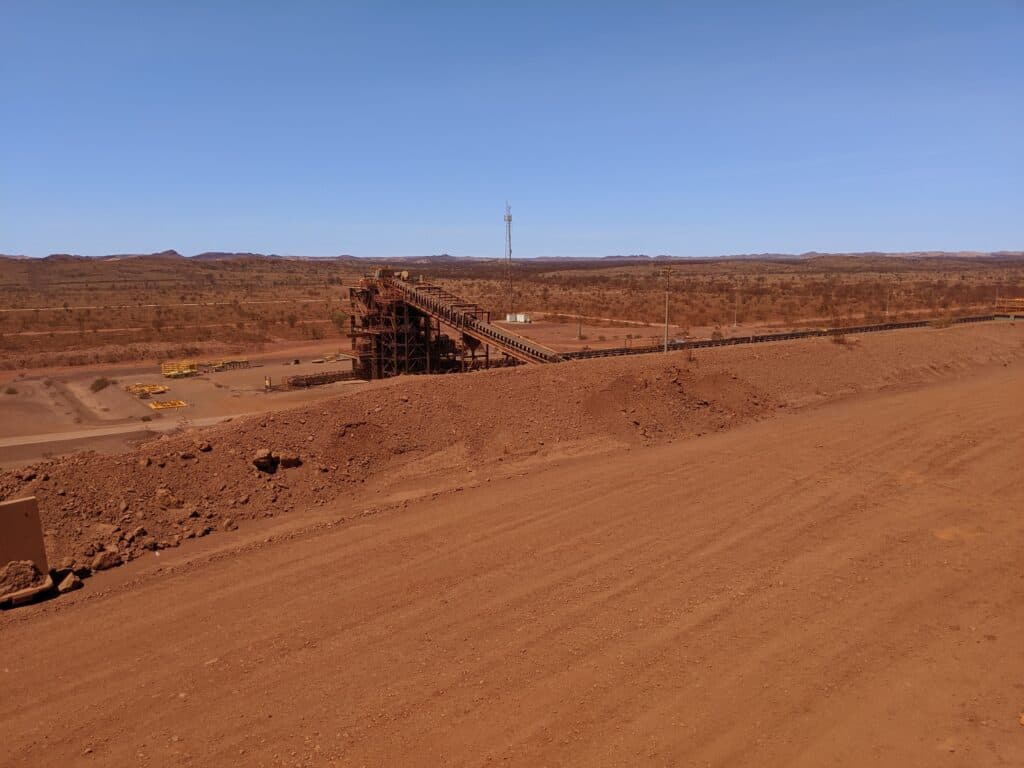
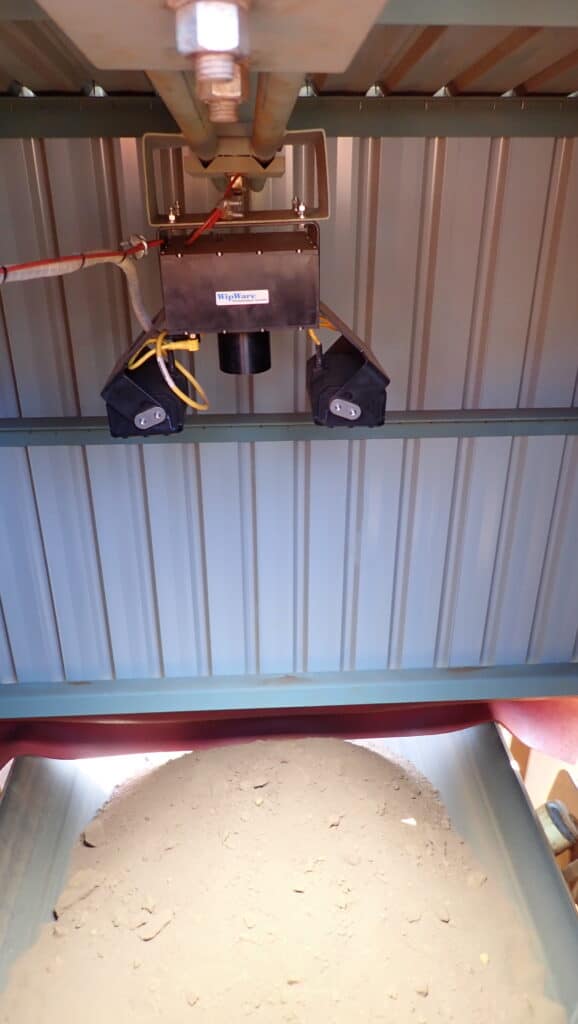
At the end of October, our WipWare Technical Specialist had the pleasure of traveling to Western Australia to install our Solo Online Conveyor Particle Size Analysis System at the BHP Jimblebar Mine. With the support and assistance of BHP and the Downer teams, the system was successfully installed with real-time particle size telemetry being collected.
The team met on the first day for a safety discussion and to visit the location where the Solo System would be installed. Our Technical Specialist also reviewed the installation steps. BHP and the Downer team installed the Solo System and Hood while our specialist concentrated on the camera, verified functionality and collected sample images for setup.
After the set up was completed, a product demonstration and a quick tutorial with WipFrag software was done.
The system will be able to detect very subtle changes in material size and shape allowing automation and optimization efforts.
Thank you to everyone for your cooperation with the successful installation of WipWare’s Solo System.
WipWare
Successful Technical Site Visit at Sudbury INO Nickel Rim South Mine
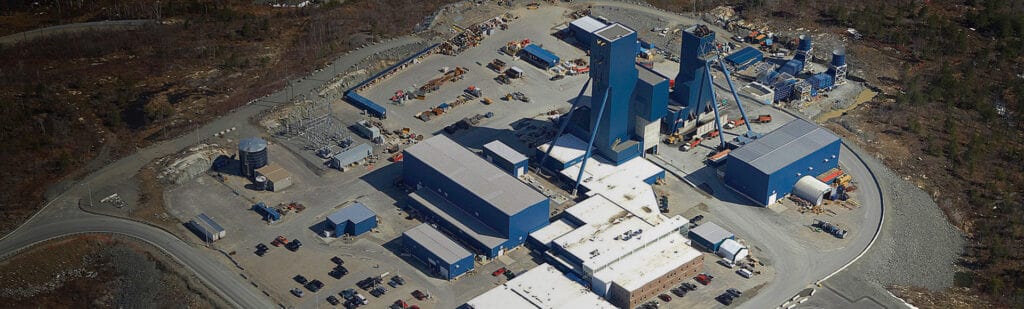
On October 29th, one of WipWare’s Technical Specialists visited the Nickel Rim South Mine to gather information about particle size distribution of the standard run material. This project was carried out through cooperation with Glencore Canada, Hatch Ltd, Jenike & Johanson Ltd. and WipWare Inc. The companies involved needed data on what material would be carried by the belt, and how the material would be processed. WipWare’s involvement was to gather photographs of the material and determine particle size and shape data through photo analysis with WipWare’s WipFrag software.
The visit to Nickel Rim South Mine was efficient and effective. The information needed was gathered quickly and safely. All parties were very accommodating of the required equipment that WipWare had to bring into the mine to effectively photograph the material. Excellent pictures were taken at the various locations that ensured an appropriate amount of data was collected and analyzed.
A special thank you to everyone on site for accommodating this project.
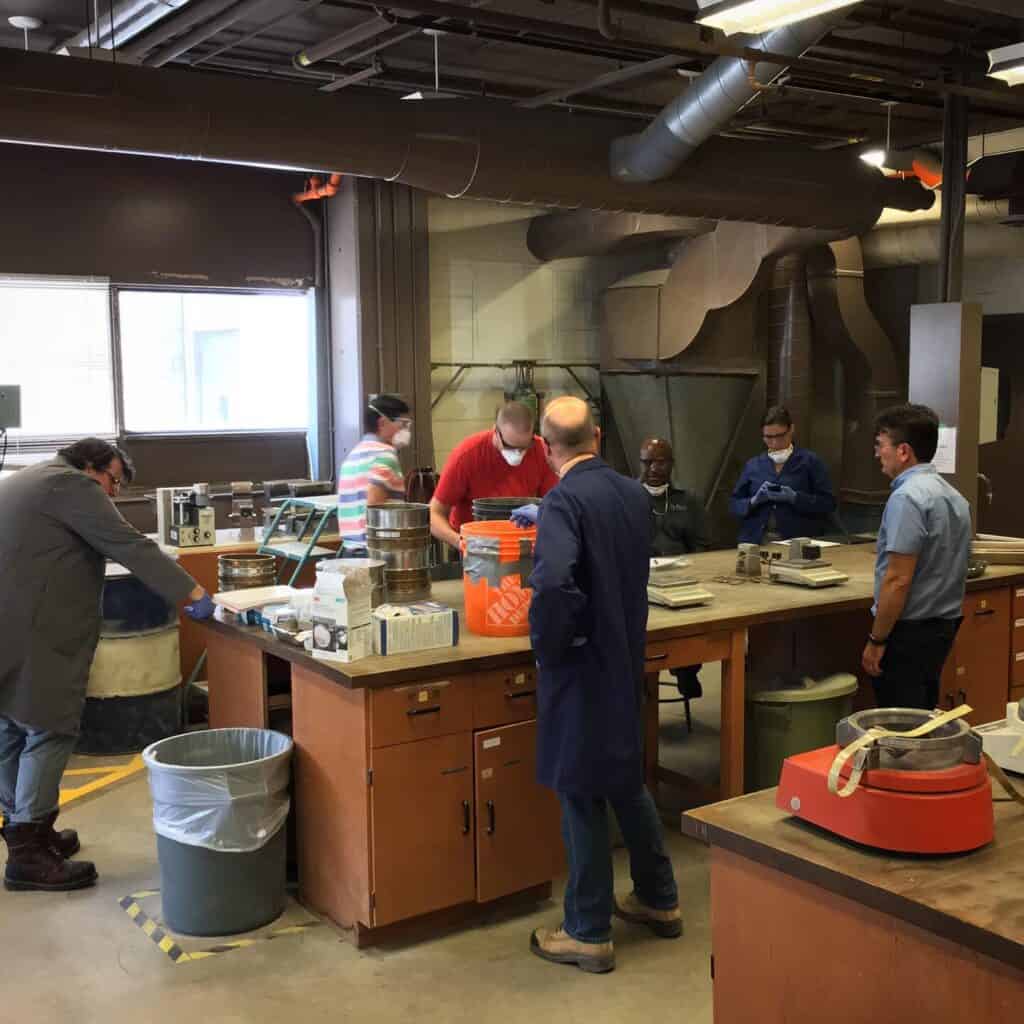
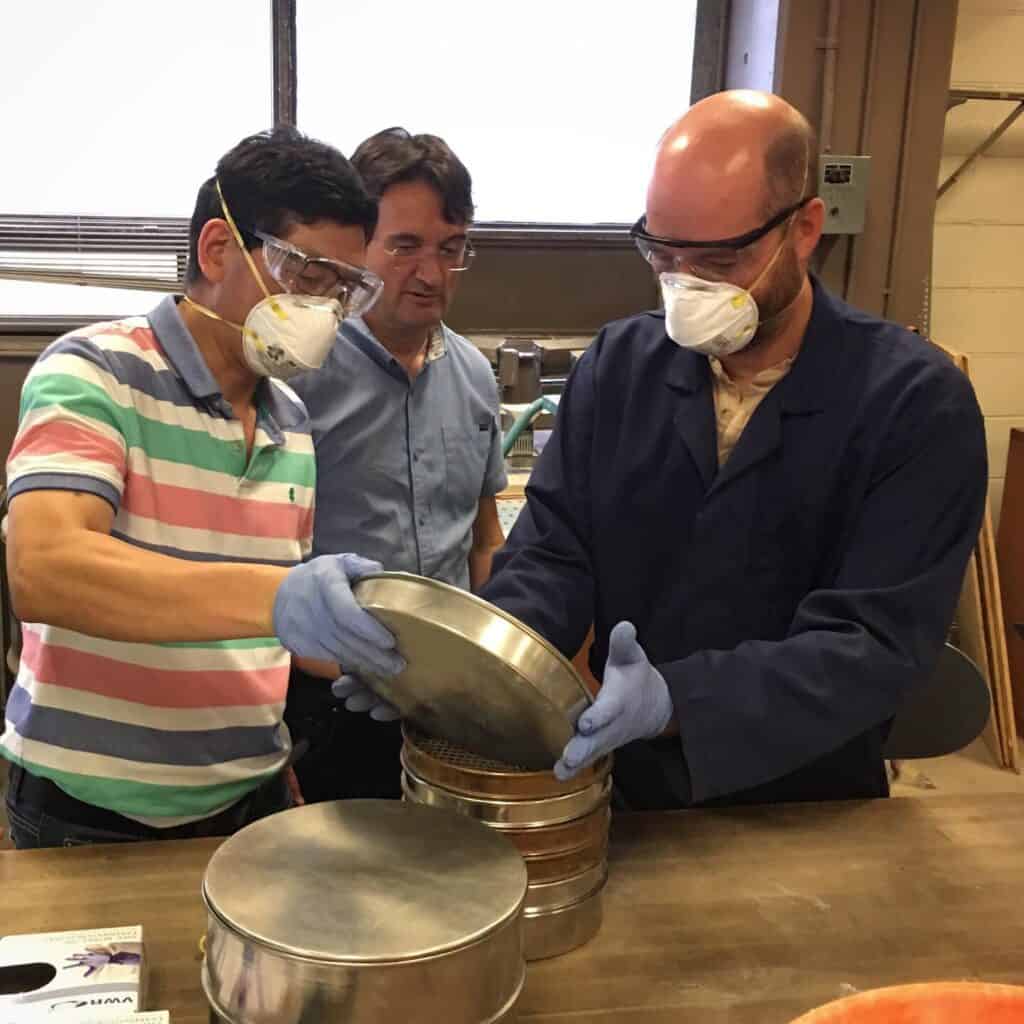
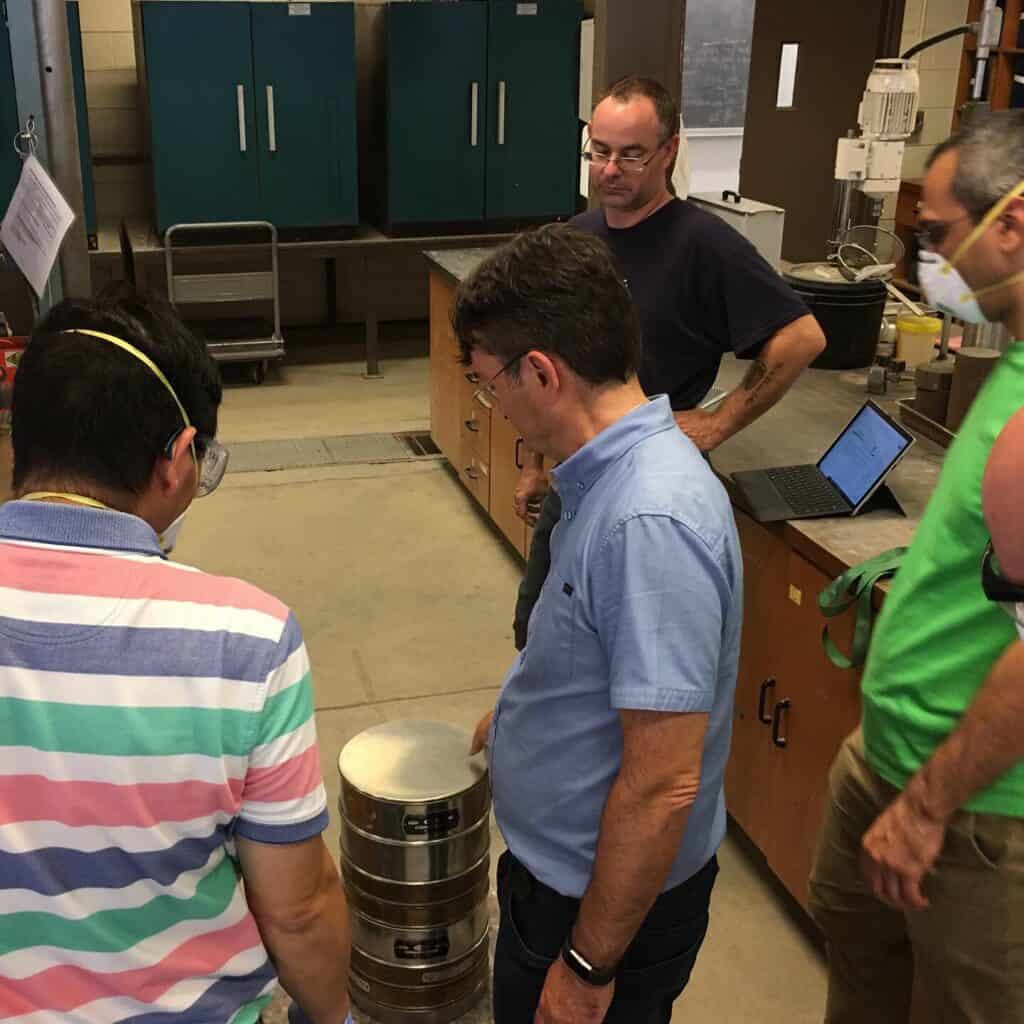
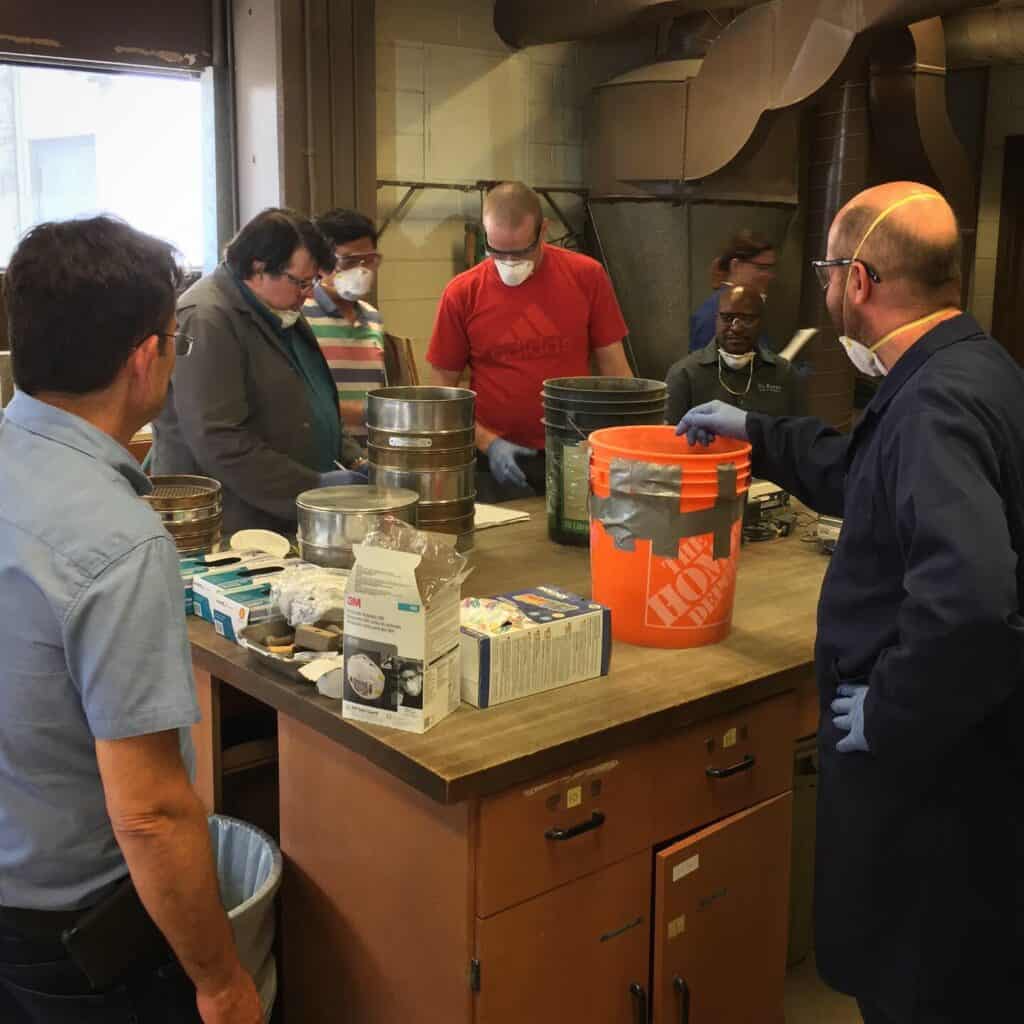
On Wednesday, August 14th, WipWare’s Value Added Retailer Technical Liaison, Marty Wanner visited Queen’s University in the beautiful city of Kingston, Ontario. Marty worked with the Head of The Robert M. Buchan Department of Mining, Takis Katsabanis, and the Bachelor of Mining Engineering Technology students. They completed a hands-on lab that included reviewing manual sieving techniques and photo analysis with WipWare’s fragmentation analysis software, WipFrag 3.
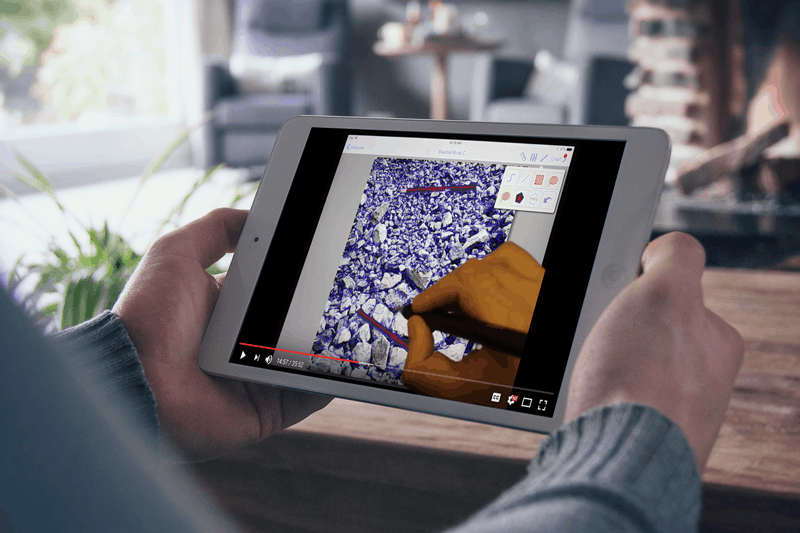
The lab included reviewing the WipFrag iOS App and working with WipFrag for Windows. Also, the lab compared the manual sieve analysis results with the photo analysis software results. Features and benefits of both processes were discussed, and the features of online analysis systems were also reviewed.
Marty very much enjoyed working with the BTech students, learning more about manual sieving techniques, and sharing resources.
WipFrag
WipFrag Training at Austin Powder hosted by Austin Powder
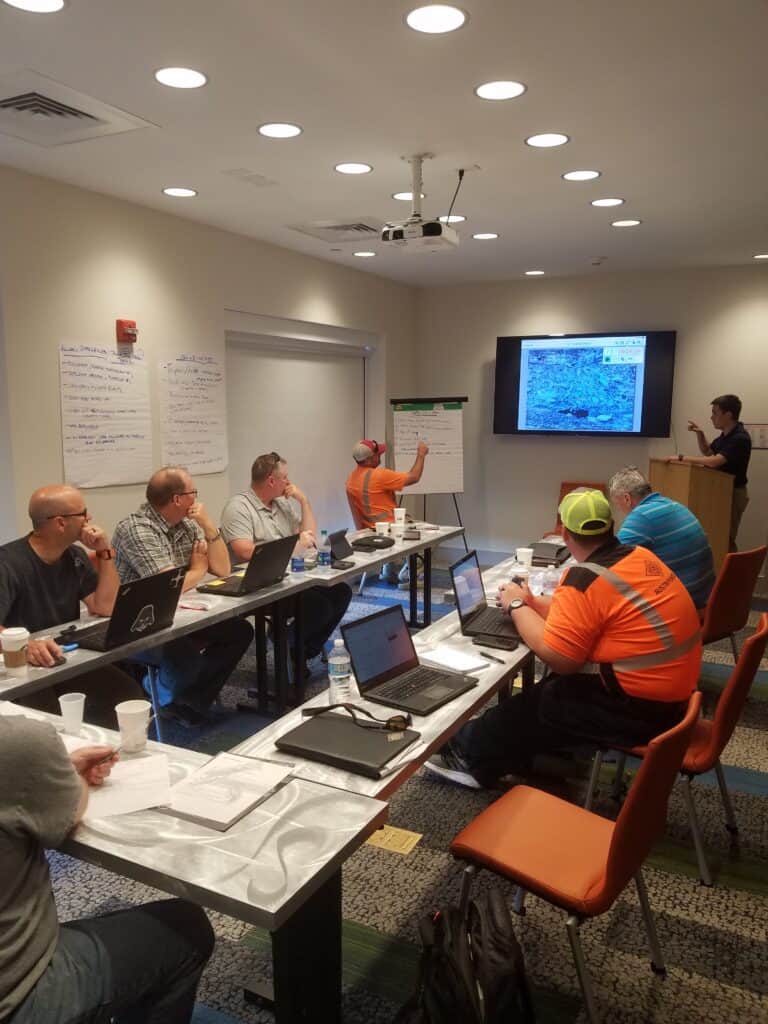
Our technical specialists are always available to assist our customers in understanding the capabilities of our systems and software. WipWare prides itself in providing ongoing technical support in-house and on-site. A two-day training workshop on WipWare’s WipFrag software was conducted with Hayden Materials, and host Austin Powder, in Elizabethtown, Kentucky.
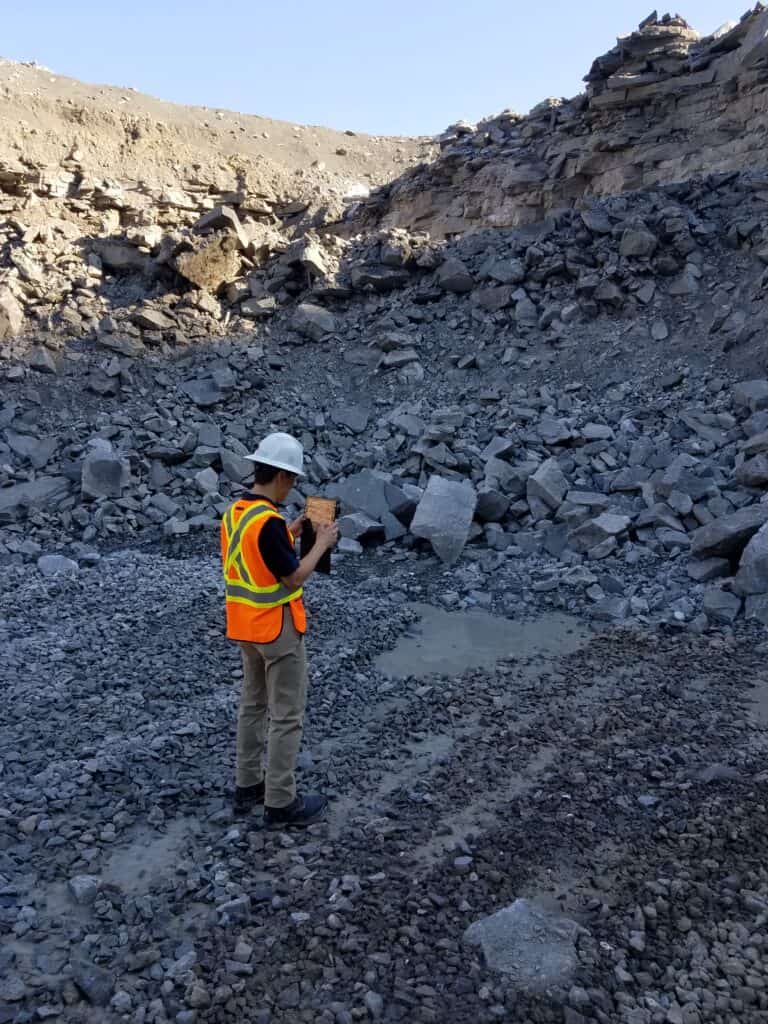
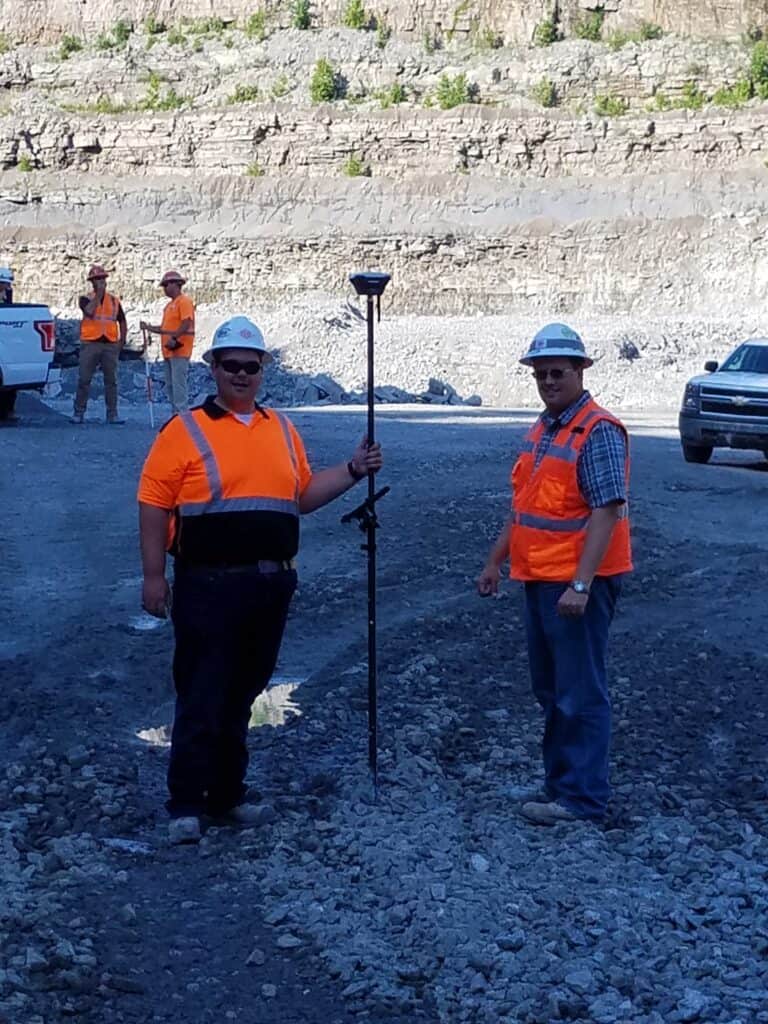
The WipFrag team visited a local quarry during the workshop. The team demonstrated WipFrag and the use of drone technology. As a result, Hayden Material customers attending the workshop saw the systematic approach to size data collection and the UAV capabilities of the WipFrag software.
With WipFrag, customers can take drone orthomosaic images and analyze these images. This ability gives the customer a full picture of their fragmentation and make quantitative decisions based on these results.
The two-day training allowed new and existing users to explore the capabilities of WipFrag for iOS and Windows and to learn new techniques that can help operators create accurate reliable size data after blasts.
WipFrag
Tips for using WipFrag Fragmentation Analysis Software
We use cookies on our website to give you the most relevant experience by remembering your preferences and repeat visits. By clicking “Accept”, you consent to the use of ALL the cookies.
This website uses cookies to improve your experience while you navigate through the website. Out of these, the cookies that are categorized as necessary are stored on your browser as they are essential for the working of basic functionalities of the website. We also use third-party cookies that help us analyze and understand how you use this website. These cookies will be stored in your browser only with your consent. You also have the option to opt-out of these cookies. But opting out of some of these cookies may affect your browsing experience.
Necessary cookies are absolutely essential for the website to function properly. These cookies ensure basic functionalities and security features of the website, anonymously.
Cookie
Duration
Description
cookielawinfo-checbox-analytics
11 months
This cookie is set by GDPR Cookie Consent plugin. The cookie is used to store the user consent for the cookies in the category "Analytics".
cookielawinfo-checbox-functional
11 months
The cookie is set by GDPR cookie consent to record the user consent for the cookies in the category "Functional".
cookielawinfo-checbox-others
11 months
This cookie is set by GDPR Cookie Consent plugin. The cookie is used to store the user consent for the cookies in the category "Other.
cookielawinfo-checkbox-necessary
11 months
This cookie is set by GDPR Cookie Consent plugin. The cookies is used to store the user consent for the cookies in the category "Necessary".
cookielawinfo-checkbox-performance
11 months
This cookie is set by GDPR Cookie Consent plugin. The cookie is used to store the user consent for the cookies in the category "Performance".
viewed_cookie_policy
11 months
The cookie is set by the GDPR Cookie Consent plugin and is used to store whether or not user has consented to the use of cookies. It does not store any personal data.
Functional cookies help to perform certain functionalities like sharing the content of the website on social media platforms, collect feedbacks, and other third-party features.
Performance cookies are used to understand and analyze the key performance indexes of the website which helps in delivering a better user experience for the visitors.
Analytical cookies are used to understand how visitors interact with the website. These cookies help provide information on metrics the number of visitors, bounce rate, traffic source, etc.
Advertisement cookies are used to provide visitors with relevant ads and marketing campaigns. These cookies track visitors across websites and collect information to provide customized ads.




 WipWare