Every operation has a specification they need their material size to be within: Whether it’s ASTM specifications for aggregate operations, key performance indicators for crushers and SAGs, or blast metrics for explosives selection, these standards are crucial in streamlining an operation’s process.
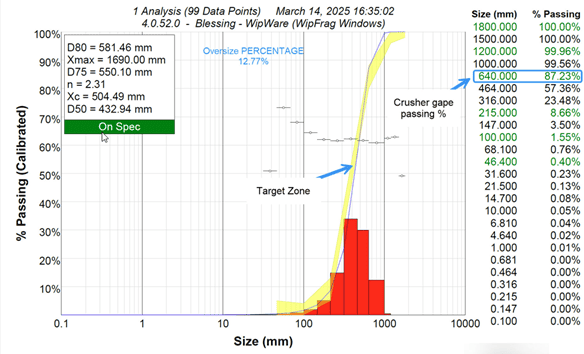
For example: an operation in northern Quebec, Canada (if you are looking at a map of Quebec, chances are you are still not looking north enough… keep going… there you go) needed to ensure material size did not exceed 6 inches in size coming out of the primary crusher, for a variety of reasons:
Bu büyük parçacıkları parçalamak için akış yönünde gereken enerji önemliydi.
Bu büyük boyutlu parçacıkların neden olduğu hasar açısından bakım sorunları
Getting maintenance personnel on-site to deal with the points was extremely costly
With the assistance of Xstrata Process Support (XPS) and a hydraulic toggle supplier, WipWare was able to not only identify when material was larger than 6″ but send signals to through a PLC that would automatically adjust the crusher mantle to bring the material size back in line. Just by reducing maintenance shutdowns to manually adjust the crusher setting, this operation was able to recoup the cost of the system within a year.
Even if your operation opts to manually adjust its process using WipWare’s systems as a guide, the benefits are widespread and significant. We’ve seen the timeline between liner replacements expanded drastically, and SAG feed optimized on-the-fly by utilizing online data as a standard.
…And for the folks who have dealt with paving specifications, all it takes is for a half mile of out-of-spec pavement to be pulled up to identify the importance of keeping material in between the goal posts.
Speaking more on the ground level of photoanalysis technology, envelopes can be created inside of WipFrag ve Solo, so operators can identify out-of-spec material briefly. Perhaps it’s a matter of notifying mining personnel, or shutting down a belt until liner maintenance is completed; regardless, having a tool that can help significantly in adhering to your operation’s standards can mean cost-savings, reduced downtime, and a more proactive approach to mining and milling.
Optimizing Blast Predictions with BlastCast in WipFrag
Predicting blast fragmentation is a complex process influenced by numerous variables and uncertainties. Achieving optimal fragmentation is essential for controlling costs and enhancing operational efficiency.
BlastCast, an advanced blast fragmentation prediction module integrated into WipFrag yazılımı, provides a valuable tool for improving blast outcomes. Available as a free enhancement, BlastCast works alongside WipFrag data to help users forecast fragmentation and make necessary adjustments to achieve desired results.
How BlastCast Works
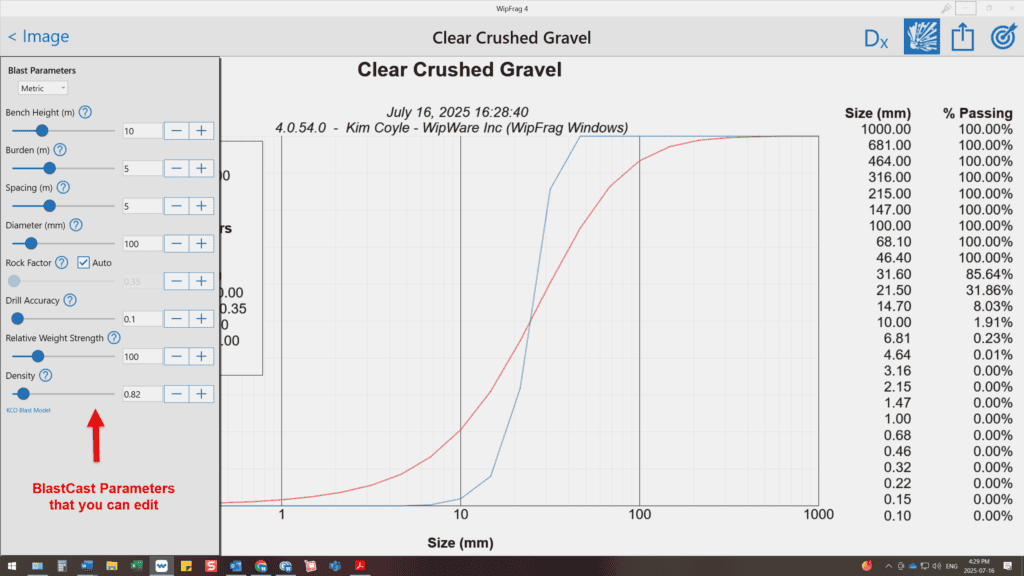
To begin, users input blast parameters, and BlastCast generates a predicted particle size distribution graph. After executing the blast, WipFrag measures the actual fragmentation. The results can be dragged into the BlastCast window, overlaying actual fragmentation over the predicted graph. By adjusting the Rock Factor slider, users can fine-tune the prediction model to align with real-world results.
Once calibrated, the model enables users to test different blast parameter adjustments, such as spacing or burden, to assess their impact on fragmentation. Over time, continued use of BlastCast enhances prediction accuracy, leading to better-controlled blasts.
Key Features & Parameters in BlastCast
Size Class Settings: Matches WipFrag’s Output Options.
Metric/Imperial Units: Allows users to select preferred measurement systems.
Blast Values Checkbox: Locks the rock factor section to simulate the unknown rock condition using KCO model.
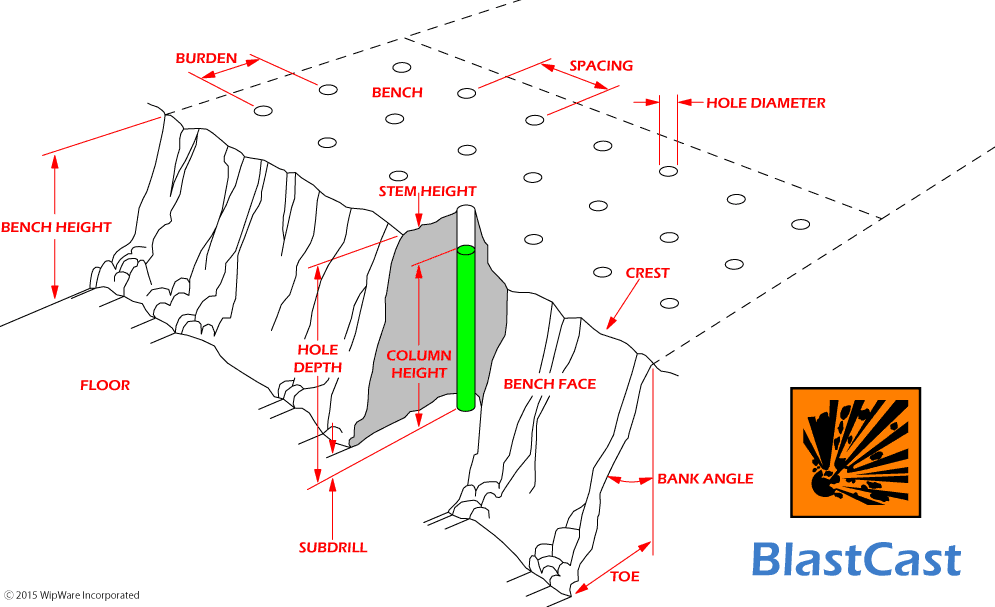
Burden & Spacing: Determines borehole placement for efficient breakage.
Drill Accuracy: Accounts for deviations in borehole alignment.
Bench Height: Specifies the height of the face being blasted.
Explosive Density & Strength: Pulls specifications from manufacturers to assess explosive performance.
Rock Factor: The most challenging parameter to determine, considering multiple geological properties affecting blast results.
Why Use BlastCast?
By integrating BlastCast into your blasting workflow, you can fine-tune designs, optimize fragmentation, and improve cost efficiency. Whether adjusting spacing, burden, or explosive selection, BlastCast helps you make data-driven decisions for better blast outcomes.
Want to see BlastCast in action? Bize Ulaşın for a demo!
Reflex
Evaluating Rock Comminution Pre-Blast to Post-Blast and Through Mineral Processing
The Need for Energy Efficiency Assessment in Blasting
In today’s mining and quarrying operations, energy efficiency remains one of the most pressing challenges. Blasting, being the first step in the comminution process, consumes a significant portion of total energy in mineral production. Yet, the true measure of blasting efficiency is not merely how rock is broken, but how well the resulting fragmentation supports downstream processes such as crushing and grinding.
A tool is therefore needed to assess and quantify the energy utilization in blasting, specifically through fragmentation analysis. By analyzing fragmented rock sizes in terms of percentage passing, engineers can evaluate how effectively a particular blast design converted explosive energy into rock breakage. Since controllable parameters such as burden, spacing, charge distribution, and initiation timing govern how explosive energy is distributed within the rock mass, understanding fragmentation helps determine how these parameters interact with uncontrollable factors like rock structure and discontinuities.
WipWare: The Global Ruler for Rock Size Assessment
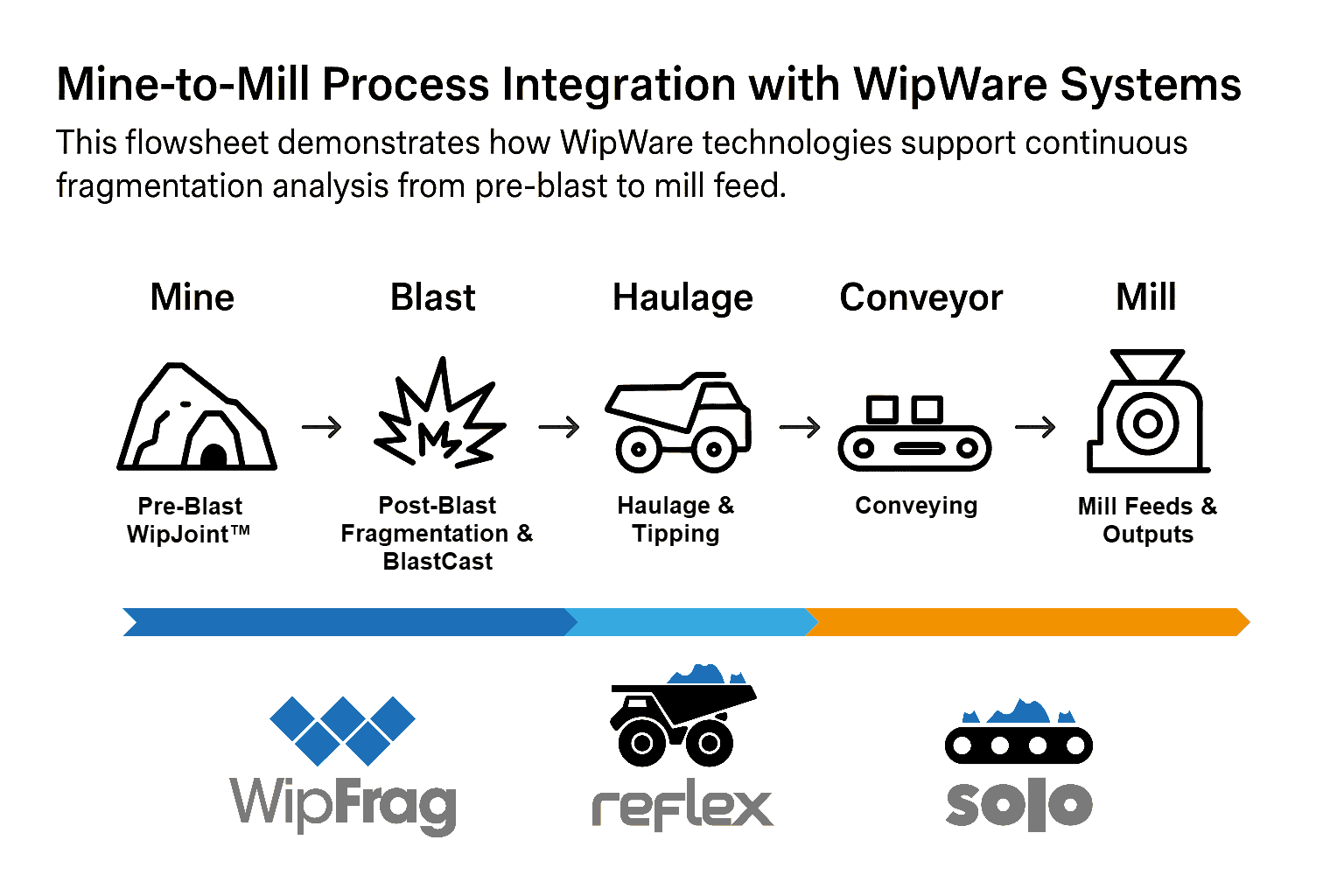
WipWare Inc. is well known as the world leader in rock size measurement and fragmentation analysis. Known as the ruler for rock size assessment, WipWare provides innovative tools that quantify particle size distributions (PSD) from pre-blast through post-blast and into mineral processing stages, creating a continuous feedback loop for process optimization.
Pre-Blast Assessment with WipJoint
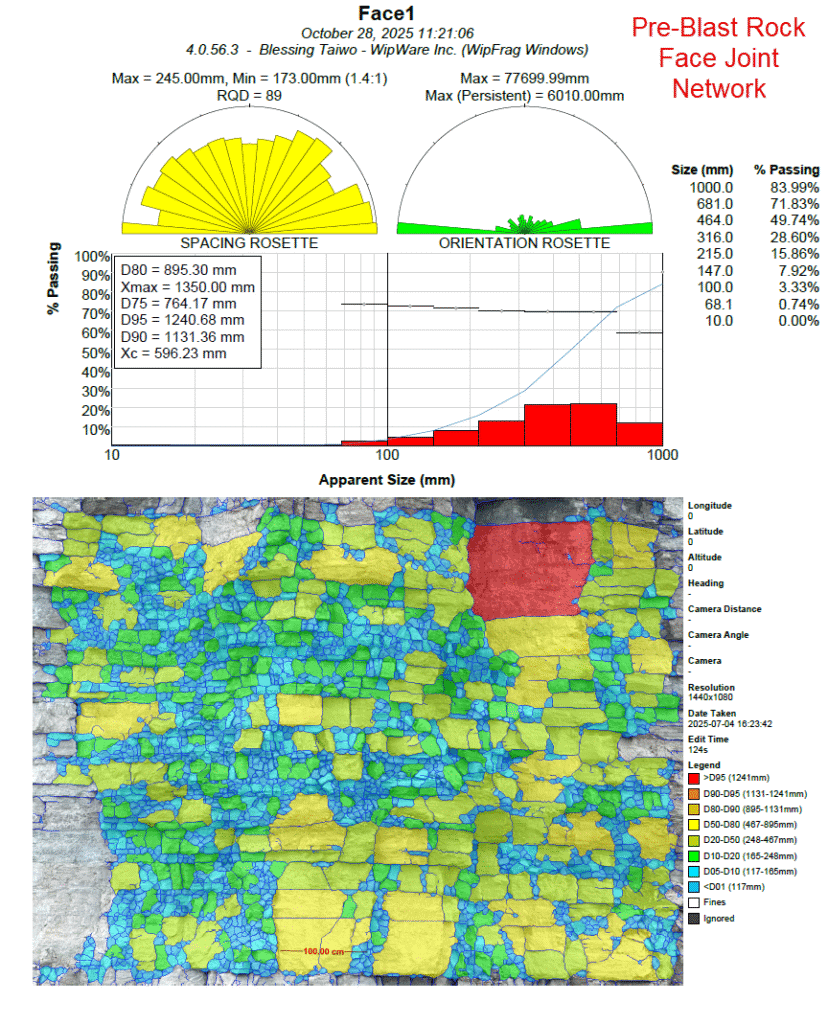
Understanding the geological conditions before blasting is crucial for predicting fragmentation outcomes. To bridge the gap between rock mass discontinuity and fragmentation potential, WipWare re-introduced WipJoint, a technology developed in 1990 by Dr. Norbert Maerz, Dr. John Franklin, and Dr. Tom Palangio.
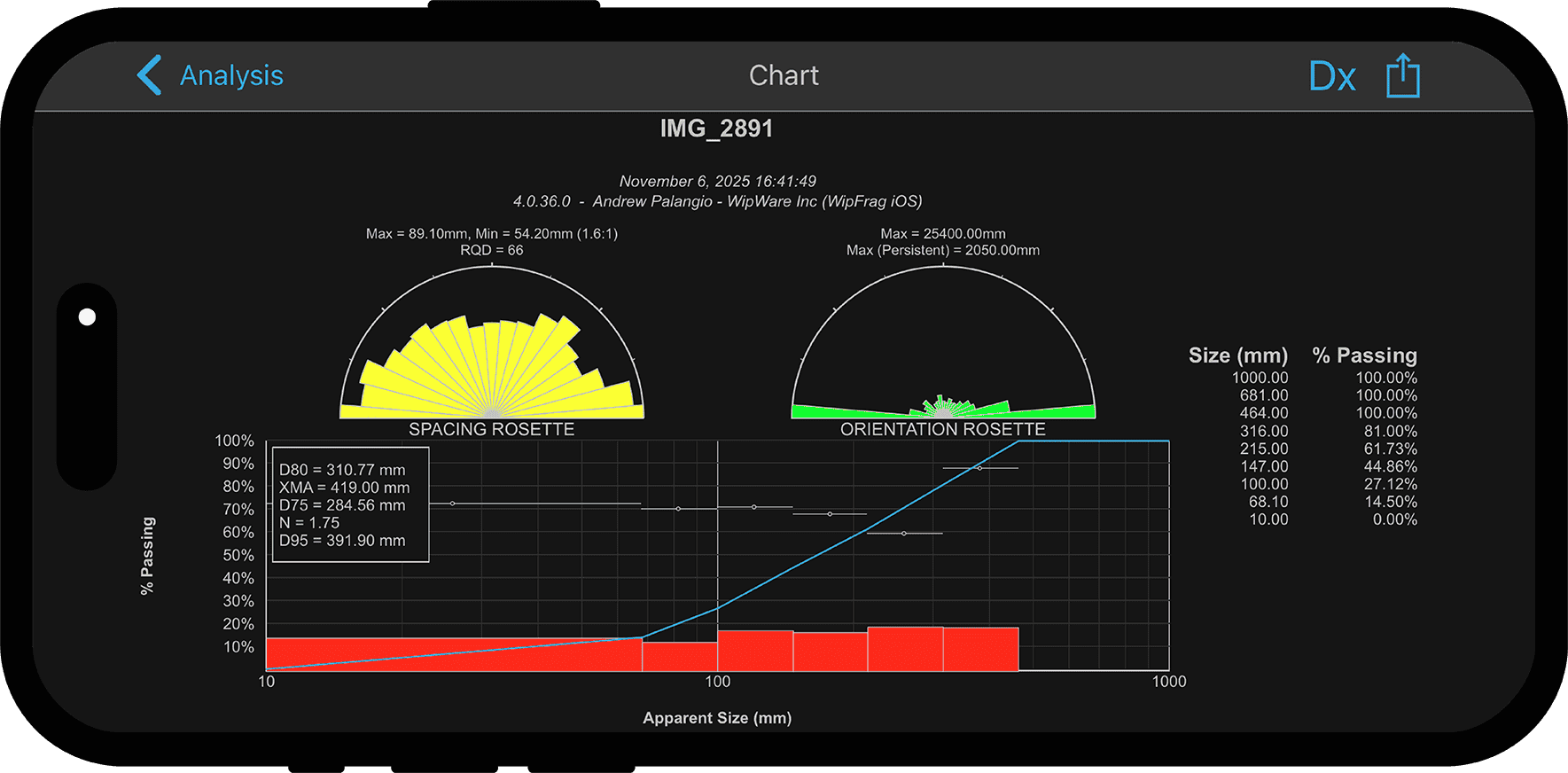
WipJoint enables users to assess rock joint apparent spacing, apparent orientation, RQD and apparent in-situ block size from digital images of rock faces. This pre-blast information is invaluable for correlating structural conditions with post-blast fragmentation results. By analyzing joint characteristics, mining engineers can refine their blast design to ensure optimal energy distribution within the rock mass, thereby improving fragmentation and reducing energy waste in subsequent comminution stages.
Post-Blast Fragmentation Analysis with WipFrag
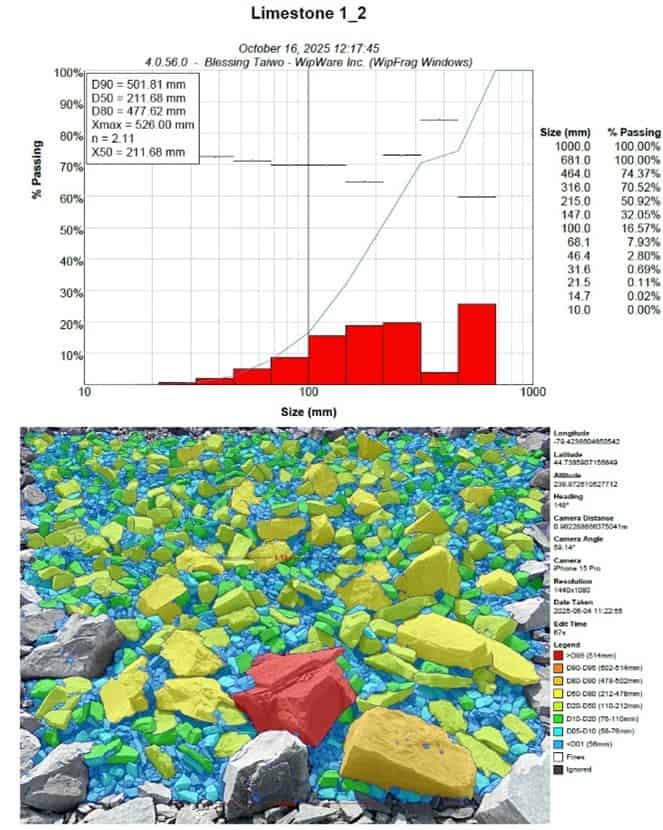
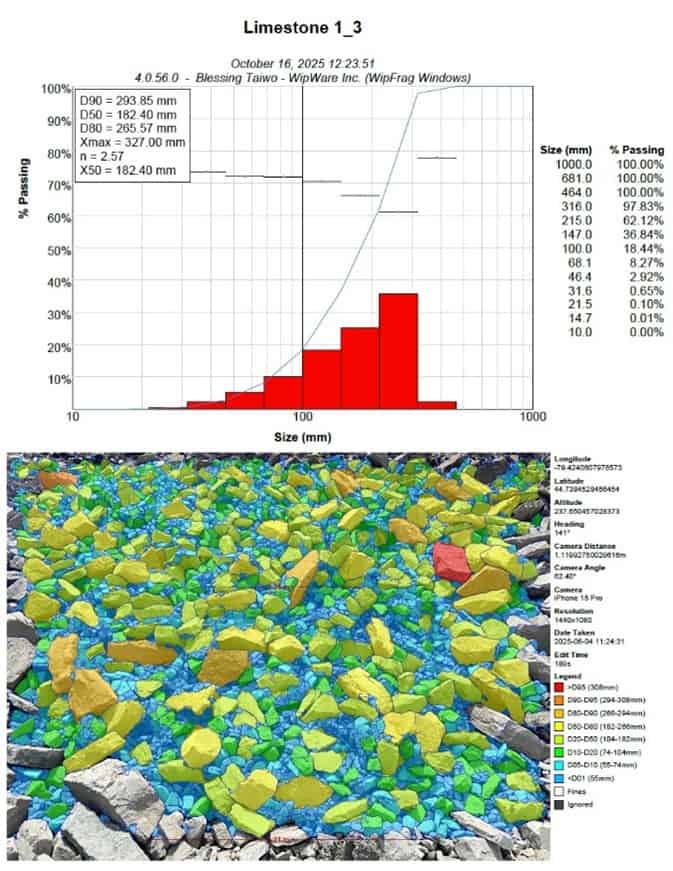
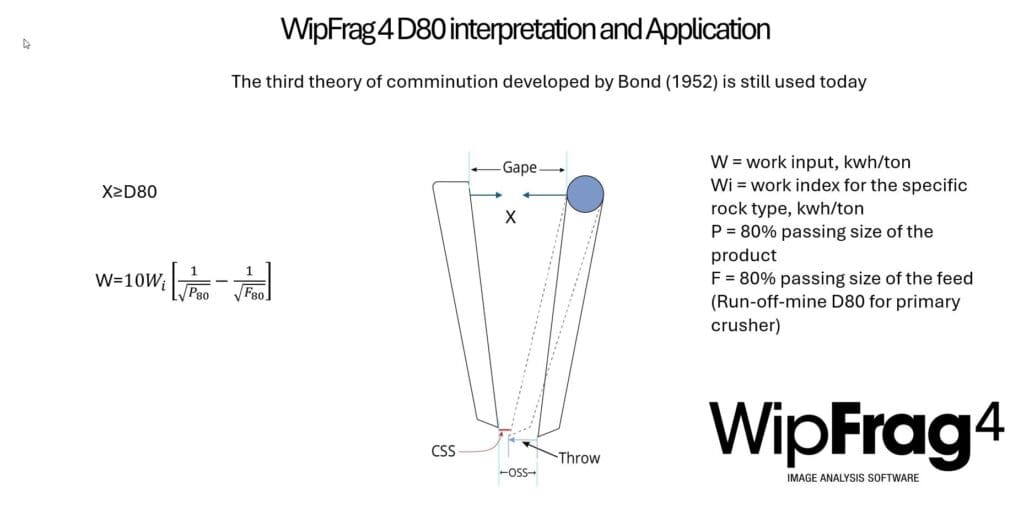
Once blasting is completed, WipFrag provides the most reliable and efficient means for evaluating fragmentation results. Using advanced image analysis, WipFrag calculates the particle size distribution (PSD) of fragmented rock piles and compares the results to target sizes such as the primary crusher’s gape.
This capability allows for quantitative comparison between different blast designs, helping to identify which parameters yield the best fragmentation for energy efficiency and crusher compatibility. With tools like specification envelopes and boulder detection, WipFrag makes it possible to assess whether the blast produced the desired material size and shape for downstream processes.
Material Assessment During Haulage with Reflex 6
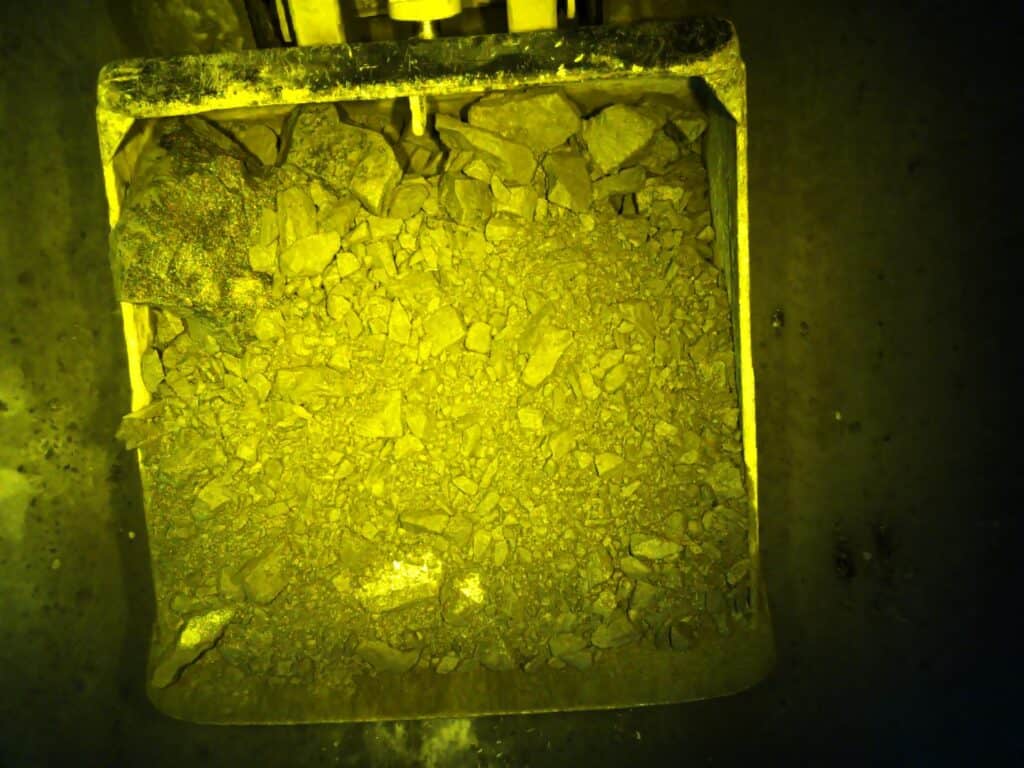
Fragmentation control doesn’t stop at the muck pile. During haulage, WipWare’s Reflex extends analysis to every truckload of material. Equipped with high-resolution cameras and an onboard computer, Reflex captures real-time images of material in transit, either while loaded on the truck or when being dumped at the crusher hopper or stockpile.
This technology enables continuous monitoring of material quality from each blast bench, providing operators with valuable data on fragmentation size, shape, uniformity and ore type variation. The Reflex system thus acts as vehicle load assessment platform, ensuring that no load goes unanalyzed.
Conveyor Belt Monitoring and Process Optimization with Solo 6
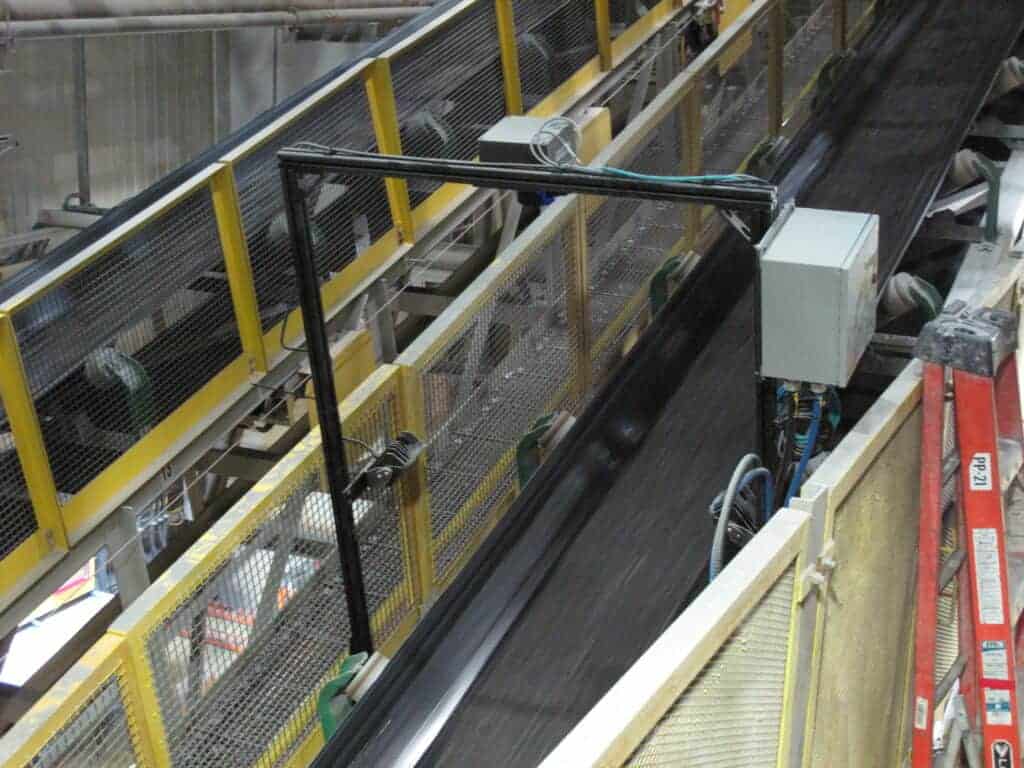
At the mineral processing stage, WipWare Solo revolutionizes comminution monitoring. Installed over conveyor belts, Solo continuously analyzes the size distribution of material feeding the crusher or exiting as product. This intelligent system provides live feedback to operators, empowering them to make real-time decisions for process optimization.
Solo integrates seamlessly with existing process control systems such as Modbus TCP and OPC UA, allowing direct communication with plant control networks. This enables automatic crusher gap adjustment, SAG mill feed control, and load balancing, ensuring that the plant operates within optimal limits.
By maintaining consistent feed size and adjusting operational parameters accordingly, Solo helps minimize bearing pressure, reduce liner wear, improve throughput, and enhance overall energy efficiency throughout the comminution circuit.
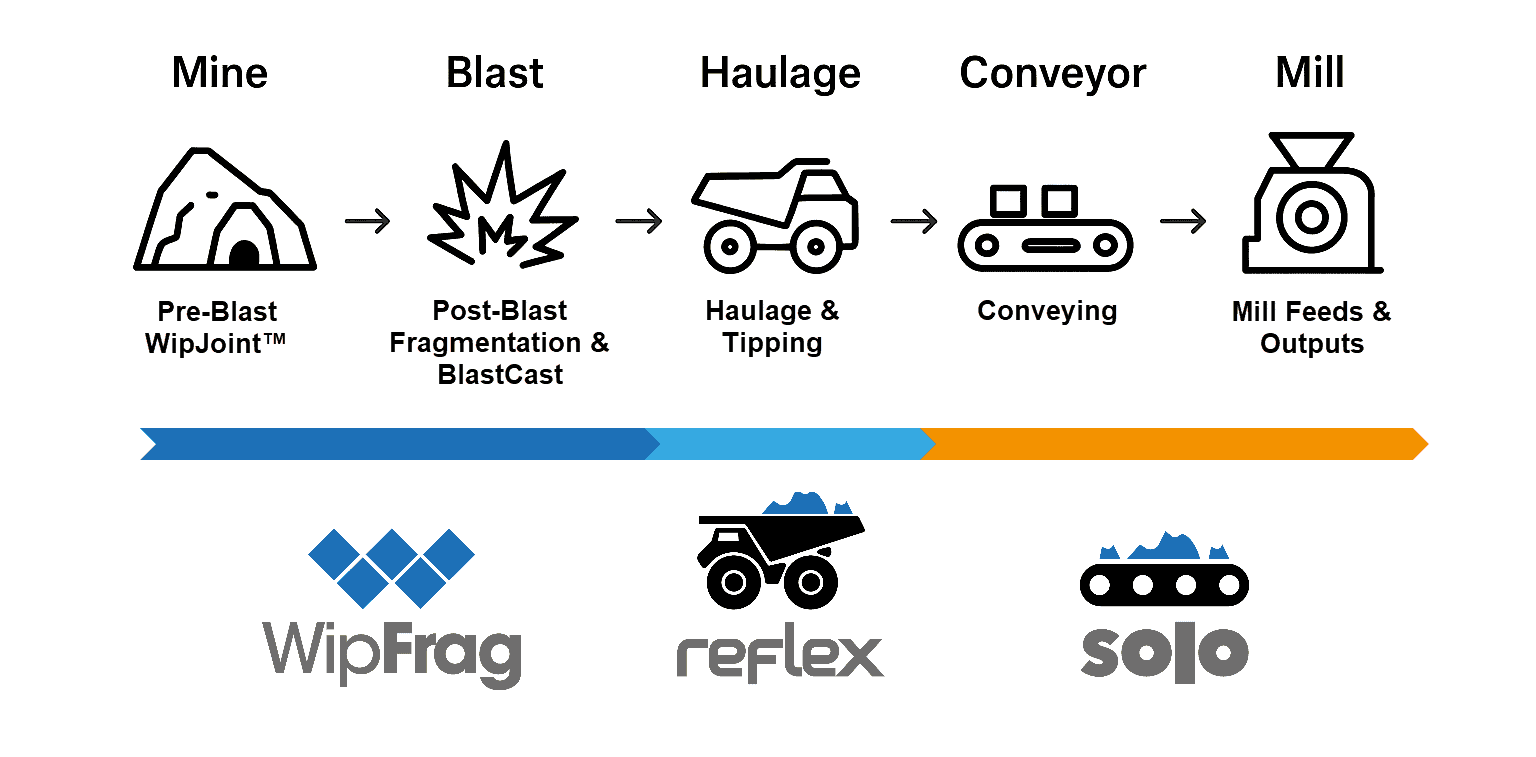
WipWare technology provides a fully integrated suite of solutions that cover every stage of the comminution chain, from pre-blast geological assessment (WipJoint), through post-blast fragmentation evaluation (WipFrag), haulage assessment (Reflex), and processing control (Solo). By quantifying and connecting each step, WipWare enables mines to measure, monitor, and optimize energy use across the entire operation. The result is smarter blasting, improved crusher efficiency, and a more sustainable approach to mineral processing, achieving the ultimate goal of energy-efficient comminution.
Mine-to-Crusher Application of WipWare Solutions: Case Study at dstgroup Quarry
This study presents the third phase of a three-part research series focused on optimizing the interface between blasting and primary crushing operations at dstgroup aggregate quarry in Portugal, using WipWare solutions. The central goal is to improve fragmentation outcomes to better align particle size distribution (PSD) with crusher requirements, thereby reducing energy consumption and enhancing operational efficiency.
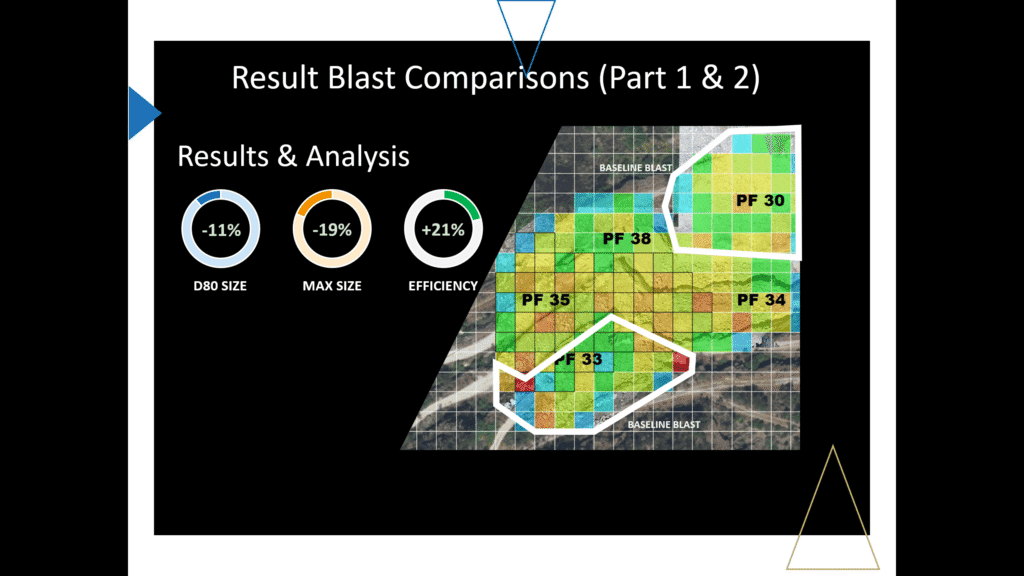
Building on the baseline methodology developed in Part 1, which incorporated 3D bench modeling and borehole surveys to assess blast compatibility with crusher specifications, the study identified discrepancies between predicted and actual fragmentation results. Part 2 applied targeted adjustments, such as reducing subdrill depth and altering stemming material, achieving measurable improvements in D80, maximum fragment size, and overall blast efficiency. However, boulder formation persisted in certain blast rows, prompting further optimization.
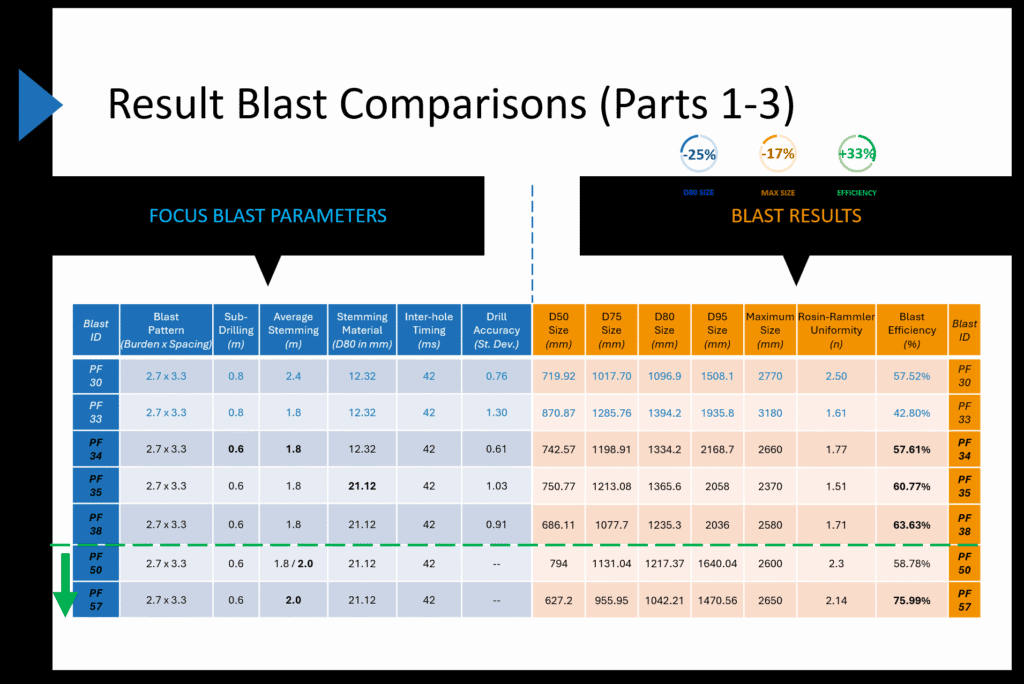
In this phase, the team implemented remaining recommendations, including refined drill and blast patterns, increased stemming size (from D80 12 mm to 21 mm) and length (from 1.8 m to 2 m), improved drilling accuracy, and adjusted inter-hole timing. High-resolution drone imagery and point-by-point blast surveys were integrated into O-PitSurface simulations to evaluate blast performance. WipFrag software was utilized for detailed particle size analysis, enabling comparison of fragmentation outcomes before and after design modifications.
Results demonstrated significant gains: D50 decreased by 19%, D80 and D95 by 20% and 23%, respectively, and maximum particle size reduced by 3%, indicating better control over oversized material. Fragmentation efficiency improved by over 21%, and the uniformity index increased by 16%, reflecting more consistent and predictable PSD. Adjustments to stemming material and length enhanced energy confinement, minimizing premature blowout and promoting even energy distribution throughout the blast column.
Run-of-mine monitoring with the Reflex system above the primary crusher provided real-time PSD analysis, confirming continuous improvement in fragmentation and crusher feed consistency. Over a six-month period, key size distribution metrics consistently trended downward, validating the effectiveness of iterative blast parameter adjustments and demonstrating the value of data-driven, integrated mine-to-crusher strategies.
In conclusion, the study illustrates how WipWare solutions, including WipFrag, Reflex, and O-PitSurface, enable quarry operations to optimize fragmentation, reduce oversize and fines, improve crusher compatibility, and enhance overall operational efficiency. The mine-to-crusher framework serves as a replicable model for energy-efficient, predictable, and high-performance blast-to-crusher integration.
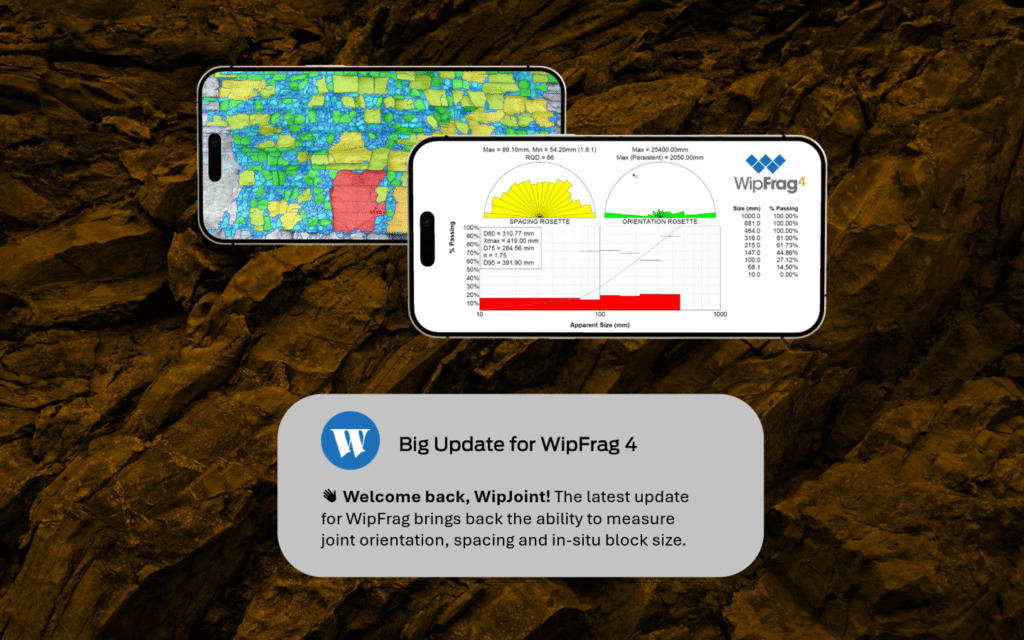
We’re excited to announce the newest update to WipFrag 4– bringing back and modernizing one of our most powerful features: WipJoint. WipJoint was originally part of WipFrag 2.7, but never reached the full functionality we wanted for it due to limitations with what software and camera hardware could do back in those days. Now with the added capabilities of today’s technology we have reimagined and reintegrated this powerful tool into WipFrag to give you even more reasons to use WipFrag!
What’s New in This Release:
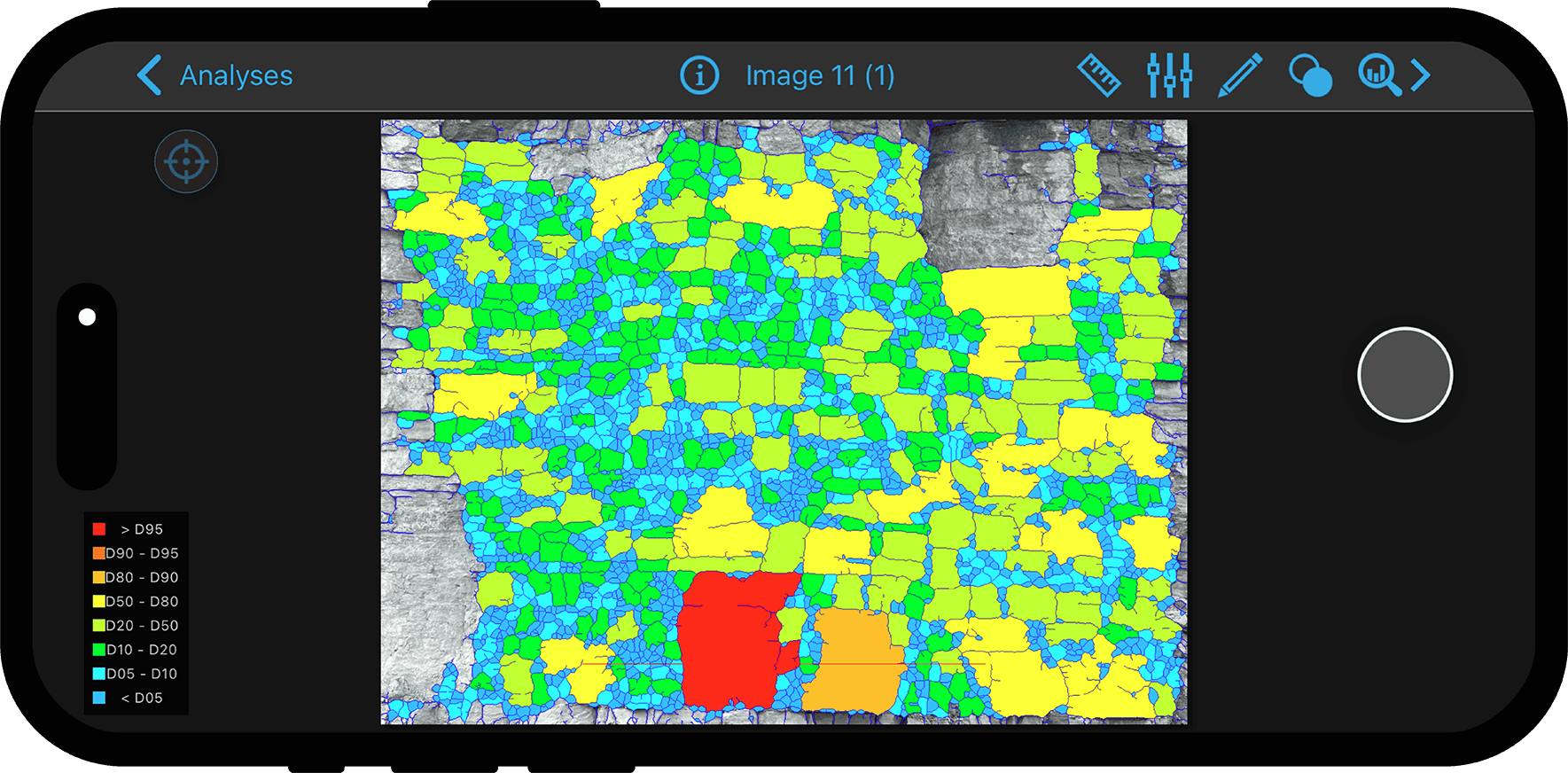
WipJoint Returns – redesigned with an intuitive new interface for assessing highwalls, measuring Rock Quality Designation (RQD), mapping joint planes and persistence, and determining apparent orientation and in-situ block sizes.
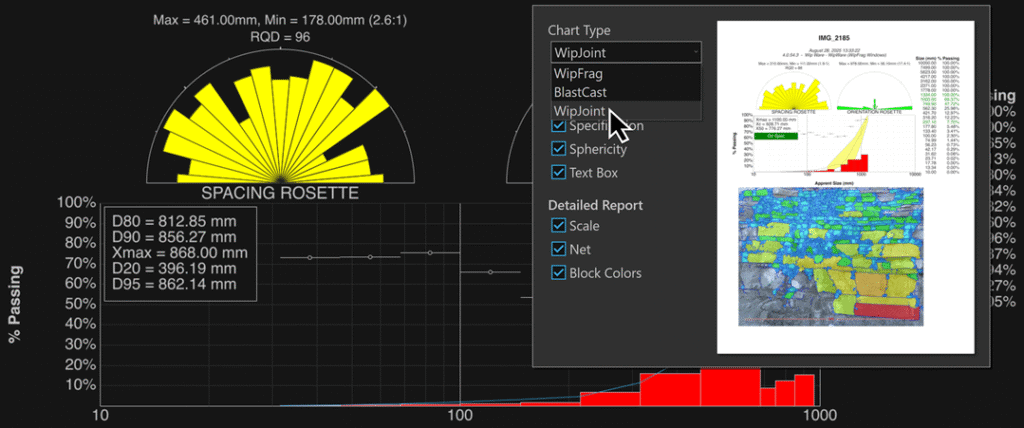
Simply change to the WipJoint view on your analysis card by right-clicking on the chart (tap + hold for mobile).
BlastCast Relocates – We’ve moved the selection for the BlastCast feature to the same analysis card chart options, next to WipJoint, for faster access and a cleaner workflow for our users.
Three Aspects, One Platform
Now WipFrag lets you monitor 3 key aspects of your process:
Measure size distribution, shape distribution and colour of your material.
Map joint planes and analyze in-situ block sizes with WipJoint.
Predict and optimize blast outcomes with BlastCast.
And remember: WipFrag works anywhere – on the surface, underground, or in the air with drone imagery. Try it out today!
Availability
This update is FREE for all active WipFrag subscribers and credit users.
Windows: WipJoint is available in v4.0.55.0 and onwards. Make sure your device is connected to the Internet and check your WipWare Account Sync app to track progress.
iOs: WipJoint is available in v4.0.35.0 and onwards. Check for updates in the App Store.
Android: WipJoint is available in v4.0.33.0 and onwards. Check for updates in the Google Play Store.
More Information
Click this Tutorial Video link to learn how to access, use, and interpret WipJoint results, including capturing bench wall and highwall images, analyzing joint orientation rosettes, measuring spacing, and interpreting in-situ blocks and RQD: https://youtu.be/Wi4pfEPlcAk?si=iyGXHQ2inV4uvuq_
This is just the beginning – stay tuned for more innovations from WipWare! Visit https://wipware.com/get-wipfrag to download WipFrag 4 today.
Reflex
Hangi Kenar Algılama Parametrelerini (EDP) Kullanmalıyım?
Hangi Kenar Algılama Parametrelerini (EDP) kullanmalıyım?
Muck yığınlarını analiz etmek için WipFrag'ı kullanırken aşağıdaki yönergeleri kullanabilirsiniz:
Para cezaları = Sağdaki kaydırıcılar
Orta = Ortadaki kaydırıcılar
Büyük = Sola kaydırıcılar
Generally, you want to have accurate nets on the small- to medium-sized particles. Once you find a suitable net for this size of material you can manually edit the larger material. Using this method will help provide more accurate results.
It’s also recommended that you try to keep a similar EDP for images of the same muck pile, or when trying to compare different muck piles.
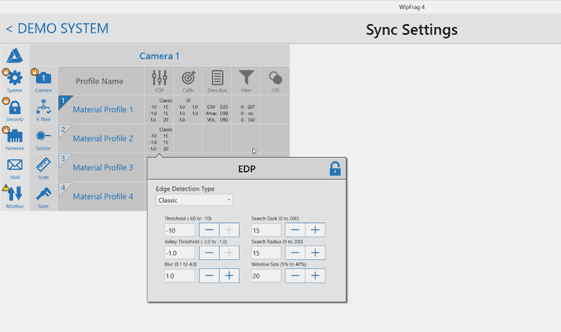
If finer adjustments are required, you can activate the ‘Show Advanced Controls’ checkbox to access numeric inputs featuring a wider range of finer adjustments than the basic sliders provide.
WipWare Automated Photoanalysis Systems and EDP
WipWare otomatik fotoanaliz sistemlerinde çalışan WipFrag yazılımının gelişmiş bir sürümü olan Delta'da, Best Fit EDP adlı bir işlem kullanıyoruz. Çevrimiçi sistemler için bu işlem genellikle kurulum sırasında yerinde yapılır. Tüm donanım ve yazılım ayarları tamamlandıktan sonra tipik bir malzemenin görüntüsü alınarak gerçekleştirilir. Mümkün olduğu kadar çok parçacığı manuel olarak izliyoruz ve ardından Best Fit EDP özelliğini çalıştırıyoruz. Yazılım daha sonra mevcut EDP ayarlarını kullanarak parçacıkların manuel izini eşleştirmeye çalışacaktır. Best Fit EDP, EDP gelişmiş kontrollerine girilecek bir dizi sayısal değer verir. Bu yöntem çok doğrudur ve çevrimiçi sistemlerimize çok uygun Kenar Algılama Parametreleri sağlar. Bir çevrimiçi sistem EDP'sinin değiştirilmesinin gerekmesi nadirdir, ancak eğer öyleyse merkezimizden uzaktan yapılabilir.
Best Fit EDP was recently added to WipFrag software. Because of the time involved in editing an image to produce a good Best Fit EDP, this feature is most practical to reduce the amount of manual editing required if you are going to be analyzing many images (20, 30 or more) of the same material under the same conditions. For most users, where smaller batches tend to be analyzed at once, using the sliders to adjust the EDP is faster.
Within WipFrag, there is also a feature called Auto EDP which attempts to determine the edge detection parameters automatically. This feature works well if the particle size range is narrow.
What happens to your blast fragmentation when you have excessive inter-row distance (burden)?
Introduction – Excessive Burden
According to Prasad et al. (2017), rock fragmentation size is a very important parameter for an economical point of view in any surface mining. Excessive inter-row distance, often referred to as an increased burden in blasting operations, can occur due to poor drilling operation (human factor, machine factor).
Applying Chapman–Jouguet (CJ) Condition:
The CJ condition holds approximately in detonation waves in high explosives. It states that the detonation propagates at a velocity at which the reacting gases just reach sonic velocity as the reaction ceases. In such case, excessive burden affects explosive energy distribution by diminishing the efficiency of the explosive shock wave travel, which impacts the creation of micro-cracks.
CJ Plane Theory
According to the CJ plane theory, an optimal burden ensures effective shock wave propagation and micro-crack formation, crucial for breaking rock.
With excessive burden, energy dissipates before adequately fracturing the rock, leading to poor fragmentation. This inefficient energy transfer disrupts the detonation process, reducing the effectiveness of the blast and resulting in larger, unbroken rock pieces.
Burden Distance Affects Rock Fragmentation
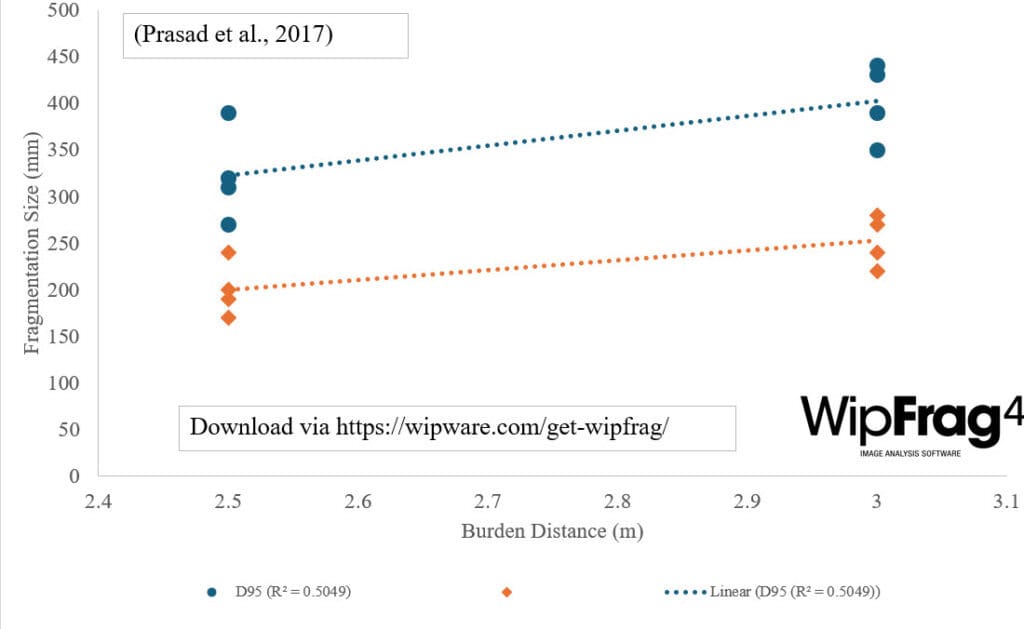
This article makes use of data from Prasad et al. (2017) to explain further the effect of burden increments from 2.5 to 3m. As shown by the regression line, the analysis revealed that the blast fragmentation size (D50 and D95) increases with more than 50% positive correlation.
This shows that, the larger the burden distance, the bigger the rock fragment generated from the blast. Having excessive burden with the same powder factor will definitely affect the fragmentation size and shape. To account for how your current burden is affecting your fragmentation, you should first assess your borehole condition before charging.
Furthermore, assess your blast results using image analysis software. WipFrag software is the most highly recommended blast assessment software, with a long history in addition to the latest technological innovation. The software offers significant advantages in assessing mine burden effects on fragmentation. Using the app on mobile phones allows for convenient, on-site analysis.
Deep Learning Capabilities
Deep learning capabilities save analysis time by quickly processing images. The boulder detection tool identifies oversized fragments, while the specification envelope helps correlate blast results with downstream primary crusher performance, ensuring optimal fragment sizes for efficient crushing and improved overall operational efficiency.
Prasad, S., Choudhary, B. S., & Mishra, A. K. (2017, August). Effect of stemming to burden ratio and powder factor on blast induced rock fragmentation–a case study. In IOP conference series: materials science and engineering (Vol. 225, No. 1, p. 012191). IOP Publishing.
Tercihlerinizi ve tekrar ziyaretlerinizi hatırlayarak size en uygun deneyimi sunmak için web sitemizde çerezleri kullanıyoruz. “Kabul Et” seçeneğine tıklayarak TÜM çerezlerin kullanımına izin vermiş olursunuz.
Bu web sitesi, siz web sitesinde gezinirken deneyiminizi geliştirmek için çerezleri kullanır. Bunlardan gerekli olarak sınıflandırılan çerezler, web sitesinin temel işlevlerinin çalışması için gerekli olduğu için tarayıcınızda saklanır. Ayrıca, bu web sitesini nasıl kullandığınızı analiz etmemize ve anlamamıza yardımcı olan üçüncü taraf çerezleri kullanıyoruz. Bu çerezler, yalnızca sizin izniniz ile tarayıcınızda saklanacaktır. Ayrıca bu çerezleri devre dışı bırakma seçeneğiniz de vardır. Ancak bu çerezlerden bazılarını devre dışı bırakmak, tarama deneyiminizi etkileyebilir.
Web sitesinin düzgün çalışması için gerekli çerezler kesinlikle gereklidir. Bu çerezler, web sitesinin temel işlevlerini ve güvenlik özelliklerini anonim olarak sağlar.
Kurabiye
Süre
Açıklama
cookielawinfo-checkbox-analytics
11 ay
Bu çerez, GDPR Çerez İzni eklentisi tarafından ayarlanır. Çerez, "Analytics" kategorisindeki çerezler için kullanıcı onayını saklamak için kullanılır.
cookielawinfo-checkbox-işlevsel
11 ay
Tanımlama bilgisi, "İşlevsel" kategorisindeki tanımlama bilgileri için kullanıcı onayını kaydetmek için GDPR tanımlama bilgisi onayı tarafından ayarlanır.
cookielawinfo-checkbox-diğerleri
11 ay
Bu çerez, GDPR Çerez İzni eklentisi tarafından ayarlanır. Çerez, "Diğer" kategorisindeki çerezler için kullanıcı onayını saklamak için kullanılır.
cookielawinfo-onay kutusu-gerekli
11 ay
Bu çerez, GDPR Çerez İzni eklentisi tarafından ayarlanır. Çerezler, "Gerekli" kategorisindeki çerezler için kullanıcı onayını saklamak için kullanılır.
cookielawinfo-onay kutusu-performans
11 ay
Bu çerez, GDPR Çerez İzni eklentisi tarafından ayarlanır. Çerez, "Performans" kategorisindeki çerezler için kullanıcı onayını saklamak için kullanılır.
görüntülenen_cookie_policy
11 ay
Çerez, GDPR Çerez İzni eklentisi tarafından ayarlanır ve kullanıcının çerez kullanımına izin verip vermediğini saklamak için kullanılır. Herhangi bir kişisel veri saklamaz.
İşlevsel çerezler, web sitesinin içeriğinin sosyal medya platformlarında paylaşılması, geri bildirimlerin toplanması ve diğer üçüncü taraf özellikleri gibi belirli işlevlerin yerine getirilmesine yardımcı olur.
Performans çerezleri, ziyaretçiler için daha iyi bir kullanıcı deneyimi sunmaya yardımcı olan web sitesinin temel performans indekslerini anlamak ve analiz etmek için kullanılır.
Analitik çerezler, ziyaretçilerin web sitesiyle nasıl etkileşime girdiğini anlamak için kullanılır. Bu çerezler, ziyaretçi sayısı, hemen çıkma oranı, trafik kaynağı vb. ölçümler hakkında bilgi sağlamaya yardımcı olur.
Reklam çerezleri, ziyaretçilere alakalı reklamlar ve pazarlama kampanyaları sağlamak için kullanılır. Bu çerezler, web sitelerinde ziyaretçileri izler ve özelleştirilmiş reklamlar sağlamak için bilgi toplar.




 WipWare